"Local news worth reading" — The New York Times
SUBSCRIBE
The independent voice for West Orange County news
Two local attorneys have filed to challenge two Orange County judges, appointed by Gov. Ron DeSantis, who are up for election in Groups 19 and 21.
Eleven county judge elections will be decided during the Aug. 18 primary election, but currently only these two races are competitive. Six other groups have a single candidate who will be seated automatically if they do not draw an opponent. Others still have time to enter the race since the qualifying period doesn’t open until April 20. It runs through April 24.
Often called the “peoples court,” the county court handles the cases that bring most people into contact with the legal system: traffic violations, misdemeanors, landlord-tenant disputes, violations of city or county ordinances and lawsuits up to $50,000.
Candidates for county judge qualify either by collecting 8,369 verified signatures from county residents — representing 1 percent of registered voters — or by paying a fee of $7,441. Qualified judicial candidates must live and be registered to vote in Orange County and be a member of the Florida Bar for at least five years. County judges serve for six years and earn $186,034 annually.
Here are the four candidates (so far) running in Groups 19 and 21.

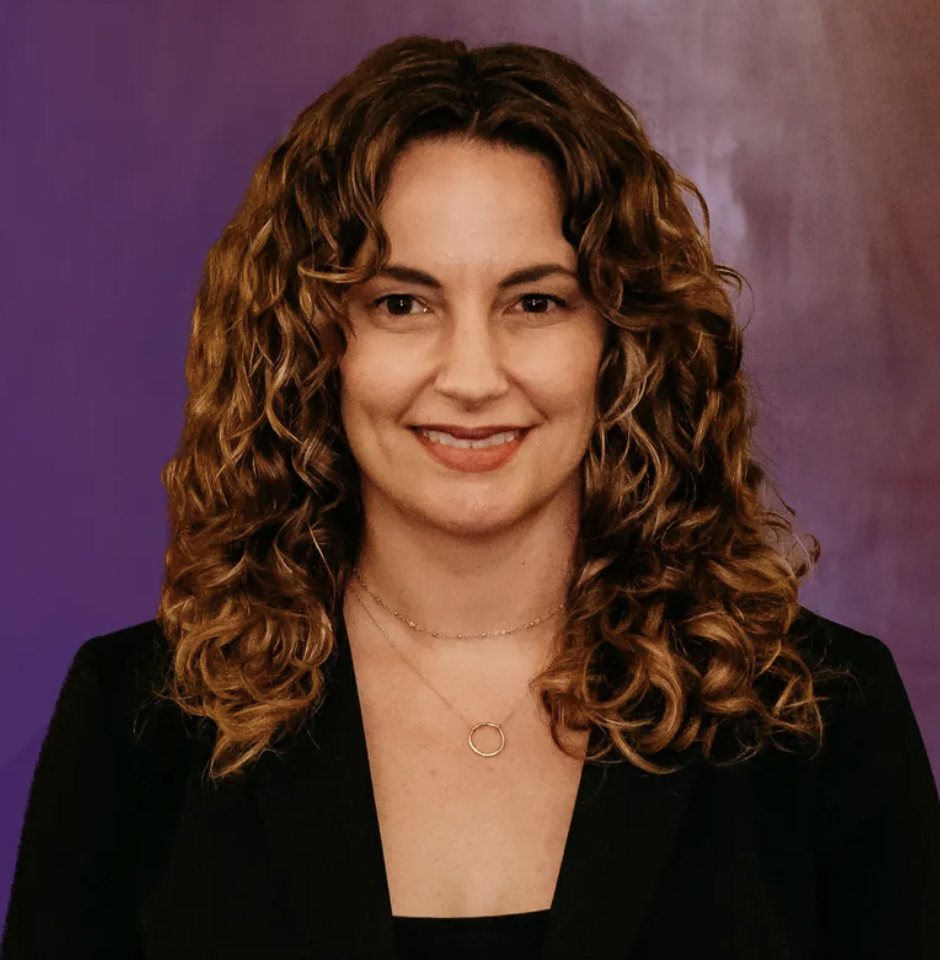
Orlando criminal defense attorney Chelsea Simmons is challenging Orange County Judge Mark A. Skipper of Maitland, who was named to the bench in February 2024 after Judge Brian Sandor was promoted to the Ninth Circuit Court.
Simmons told VoxPopuli in an email that she’s running because she understands that a judge can impact lives in ways that often extend beyond the courtroom.
County court is where those with no legal representation stand on their own and where regular people “sometimes find themselves on their worst day,” she said.
“Over the last 18 years, I've seen how crucial a well-run courtroom can be to my clients' fates. I've practiced before judges whose calm demeanor, preparedness and careful consideration led to a just result. I want to be one of those great judges that we all depend on.”
Simmons was the defense attorney for Scott Nelson, a convicted killer who faced the death penalty in 2019 after his abduction of Jennifer Fulford, a 56-year-old nanny whom he kidnapped from her employer’s Winter Park home and subsequently murdered. Nelson was sentenced to life in prison in 2020, after jurors were unable to unanimously agree on sentencing.
“That setting demands not only legal knowledge, but patience, empathy and the willingness to listen — qualities I try to embody,” Simmons said. “I've spent a lot of time in county court, first as a new assistant public defender, later as County Court supervisor and finally as a seasoned attorney in private practice.”
Born in St. Augustine and raised in Fort Myers, Simmons’s commitment to community service was shaped by her parents’ example: Her father was a family physician and her mother was a nonprofit administrator and homemaker. In high school, Simmons earned her emergency medical technician’s license thinking she might follow her father into medicine. It was when she was studying addiction at University of Central Florida with the Psychological Society’s Substance Use Research Group that her “passion for helping others” began to steer her toward the law.
She graduated magna cum laude from UCF in 2005 with a bachelor’s in psychology and got her law degree in 2008, graduating magna cum laude from the University of Florida Levin College of Law. While there she also served as a senior research editor of the Florida Journal of International Law and studied human rights law abroad at the University of Amsterdam.
Board-certified in criminal trial law and a qualified death penalty attorney, Simmons spent 12 years in the Ninth Circuit Court Public Defenders Office — two in County Court, representing clients in traffic and misdemeanor cases, and a year as the County Court Supervisor, training new lawyers in their first trials. Simmons has handled 100 jury trials, including two death penalty cases and argued nonjury trials and appeals before the Fifth and Sixth District Courts of Appeal. In 2020, she went into private practice, working for NeJame Law for four years before hanging out her own shingle in November 2024.
In 2024, Simmons received the Joe Durocher Foot Soldier of the Constitution Award from the Central Florida Association of Criminal Defense Lawyers for exemplifying “the actions of a true criminal defense lawyer.”
In addition to her legal work, Simmons volunteers with IDignity, a Central Florida nonprofit that helps people get the documents they need to obtain a state ID or driver’s license; The Desire Foundation community center and food pantry; and Orange County Animal Services. She is a member of the Central Florida Association for Women Lawyers, Paul C. Perkins Bar Association, Hispanic Bar Association, Black Women Lawyers Association of Central Florida and the Central Florida Association of Criminal Defense Lawyers.
“People deserve a judge who comes prepared, listens carefully and rules fairly and efficiently,” Simmons said. “They deserve a judge who treats everyone with dignity, respect, and compassion. Whether representing a client in a difficult case or volunteering in our community, I've always strived to lead with empathy, integrity and professionalism. I have the experience, demeanor, and values to make a fair, efficient and compassionate judge.”
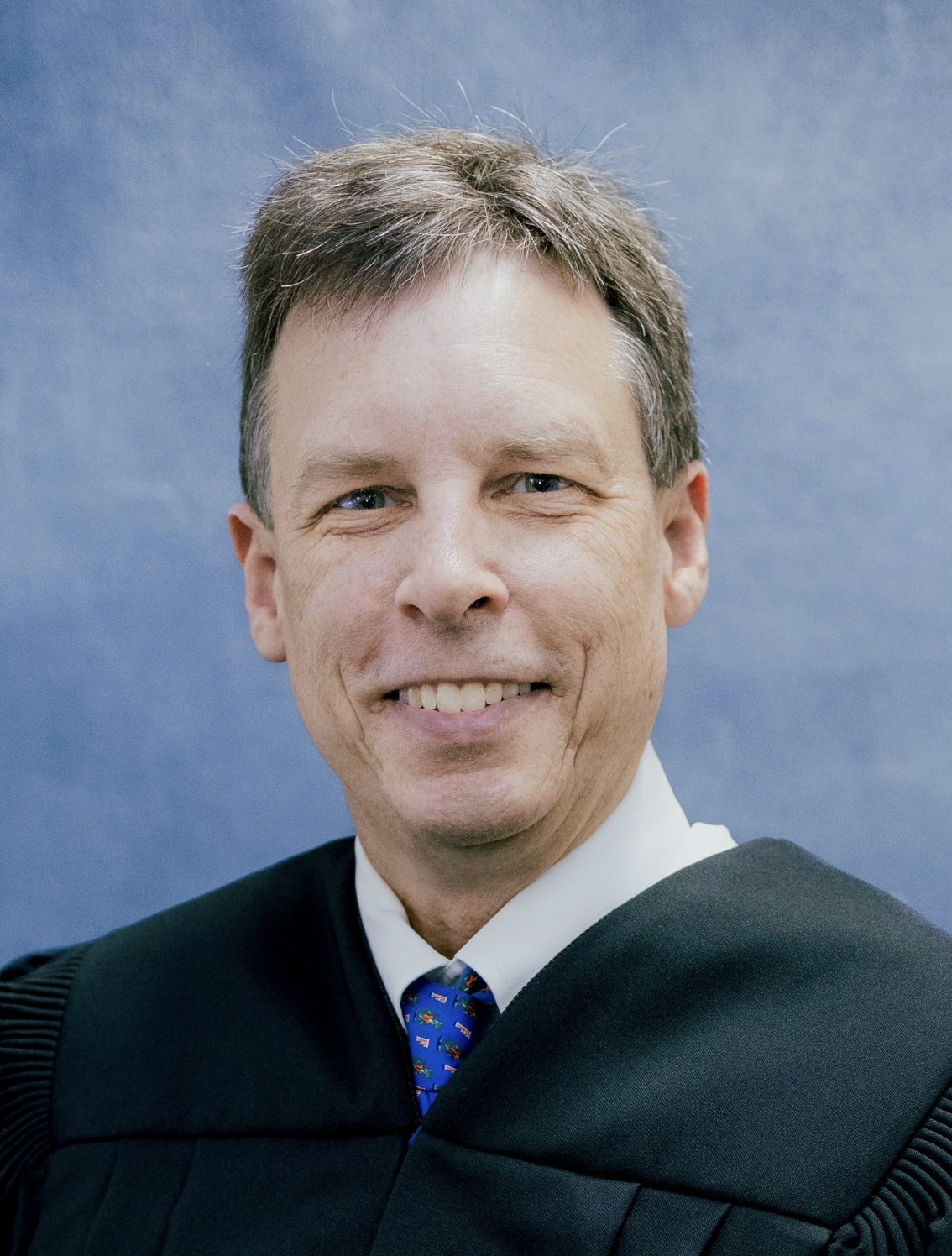
Seeking to retain his seat on the county court bench is Judge Mark A. Skipper, who brings nearly two years overseeing misdemeanors and traffic violations as a county judge in Division 7 along with 27 years as a private practice family law attorney to the table.
He told VoxPopuli in an email that he has a “reputation of fairness and following the law” and understands the importance of having “a judge that is flexible when needed.”
“If you ask the attorneys who regularly appear in front of me, they will tell you that I run an efficient docket, have patience with litigants and attorneys and follow the law,” Skipper wrote in his email.
Skipper also opens up his courtroom to local students to give them a “behind-the-scenes look at the judicial system.”
Skipper told VoxPopuli that he has lived in Florida “almost my whole life.” He earned his bachelor’s degree at the University of Florida in 1994 and his law degree from Nova Southeastern University’s Shepard Broad College of Law in 1998.
A former member of the Federalist Society and current member the Central Florida Association of Women Lawyers, Skipper worked as a senior attorney for the Florida Department of Children and Families and as a contract attorney for the Fifth District’s Criminal Conflict and Civil Regional Counsel office, a state agency that provides legal representation primarily to parents who can’t afford legal representation during cases related to child abuse, neglect and abandonment.
“When the Regional Counsel Office was established, they brought me on as a contract attorney to assist with their dependency and termination of parental rights appeals all over the 5th (sic) district,” Skipper wrote in his email. “I was able to successfully get numerous cases reversed on appeal on behalf of parents and the regional counsel office.”
After seven years with the Florida Department of Children and Families, Skipper opened his own practice where he has spent the past two decades handling family, juvenile, probate and guardianship cases until DeSantis tapped him for the bench.
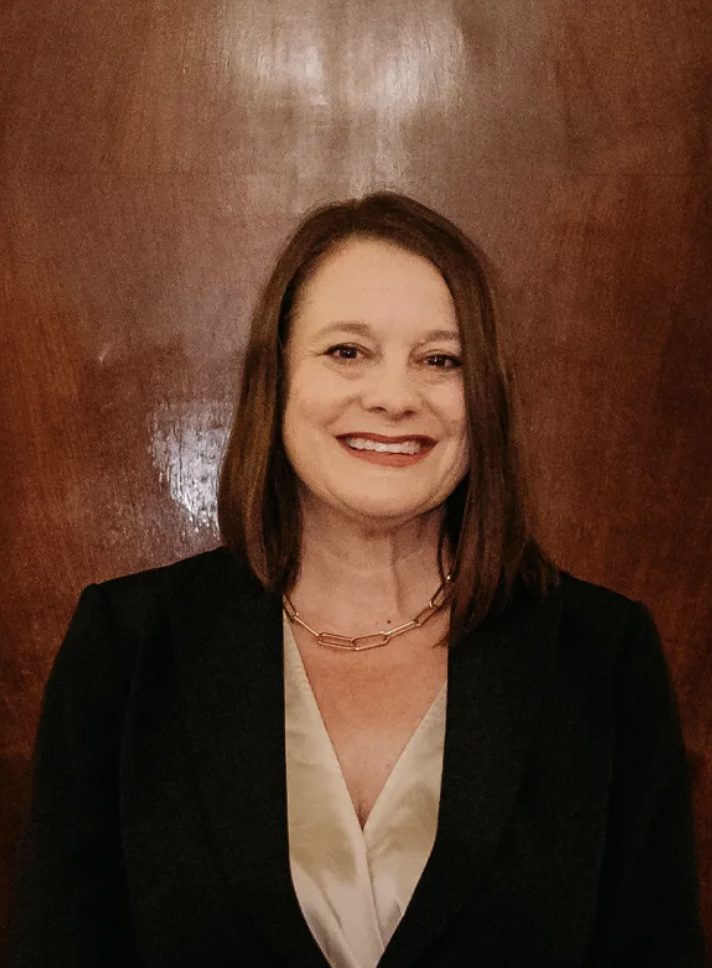
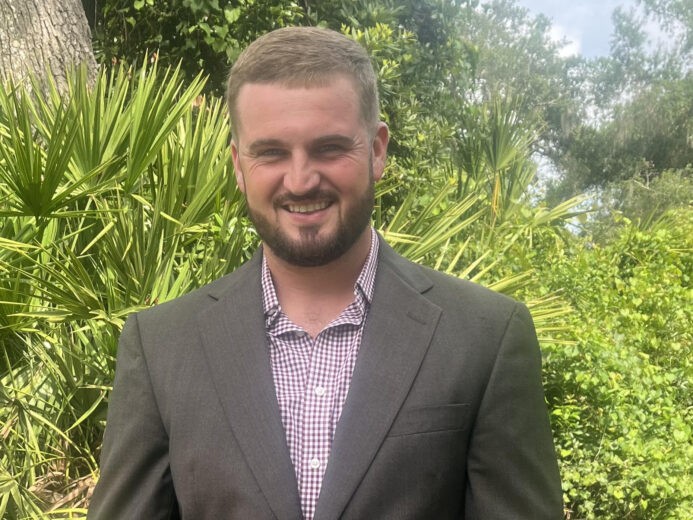
Orange County Court Judge Mark S. Miller, appointed in February 2024 to fill a vacancy that resulted from House Bill 5401, which revised the number of circuit and county court judges, is fending off a challenge by first-time candidate and Orlando attorney Judi Garabo Hayes.
Though she’d long held judicial aspirations, Hayes said on her campaign website that she’d been encouraged to run for county judge after the work she’d accomplished in county court over the past several years.
“County court is the people’s court and members of our community need a knowledgeable, experienced and compassionate judge to hear their cases,” Hayes said. “Evictions, collections, misdemeanors — sometimes your day in court is your very worst day, and I pledge to bring fairness, respect and impartiality to the bench.”
In an email to VoxPopuli, Hayes said that over the course of her legal career she’s gained that experience through practicing in “almost all areas of litigation,” including business, intellectual property and employment, among others.
“As I’ve been working in county court, I’ve seen firsthand the importance of a compassionate judge,” Hayes said. “I think I have the experience to bring that knowledge to the bench.”
Born in Framingham, Mass., Hayes is a longtime Orlando resident. She attended Oak Ridge High School before earning her bachelor’s degree in creative writing from Florida State University in 1994. She later attended Florida State University’s College of Law, interning for former Florida Supreme Court Justice Harry Lee Anstead and graduating with her law degree in 1998.
She joined Orlando firm Heinrich Gordon Hargrove Weihe in 1999, handling insurance defense litigation and in 2003 joined the litigation department of Greenberg Traurig. She took a hiatus from full-time work in 2007 to raise her boys, though she remained active in the courtroom on a part-time basis with project work. She went back to work full-time at Bloodworth Law in 2019. But the following year when the pandemic hit and schools shifted from in-house to virtual learning, Hayes returned home to assist with her children’s education.
“[My youngest son] has a one-to-one paraprofessional in class, so when everything shut down that meant I had to be there to help keep him on track,” Hayes said. “My husband is an in-house lawyer for a large insurance company, and he was able to work at home. While our older son didn’t need a lot of supervision, the little one really did, and so one of us had to take that on.”
While at home, Hayes said she also found herself “thrown into the world of educational advocacy.”
“I’d been advocating for public education at the local and state level for years, everything from disability access to advanced education,” Hayes said. “That gave me the resources to build coalitions and empower other parents to advocate for public education — for better funding, more accountability, intellectual freedom, etc.”
In 2022, she began workin as a regional organizer with the non-partisan advocacy group Families for Strong Public Schools. She also participated in the Florida Developmental Disabilities Council’s Partners in Policymaking program and served on textbook review committees for Orange County Public Schools.
Her efforts also led her to join the Penguin Random House v. Gibson federal lawsuit brought against the Florida Board of Education in 2024 after the state’s House Bill 1069 lead to books being removed from school libraries. Hayes serves as the guardian for her eldest son, Jack, a junior plaintiff who joined the case after being unable to check out Jack Kerouac's On the Road from his own school library.
In August, a federal judge in Orlando struck down several major parts of the bill deeming them unconstitutional, including allowing state residents to challenge books over “sexual content” in school or classroom libraries in their county. Despite the victory, Hayes said the case is currently on appeal and believes it could potentially head for the Supreme Court.
That experience was part of what motivated her to seek election this year.
“[Joining the case] did shape my decision to run, because I can see just how important judges are in this particular moment in history vis a vis upholding due process and the rule of law,” Hayes said.

Retaining Judge Mark S. Miller on the bench in the criminal court division will “keep Orange County safe,” according to his campaign website.
He describes himself as a judge who’s “deeply rooted” in the community and upholds “the values that strengthen our communities and protect the rights of all.”
Since his appointment, Miller has presided over criminal traffic violations, criminal mischief, and misdemeanor crime. He maintains that when making legal decisions, some second chances may “require a firm application of the law” while others need the mercy of the court.
"My professional experience — both in the courtroom and beyond — reflects a lifelong dedication to justice, integrity and the rule of law," he states on his campaign site.
Born and raised in Osceola County, Miller earned a bachelor’s degree in political science from the University of Florida, then taught American government and Constitutional law classes in Osceola County Public Schools, before joining the U.S. Army as an explosive ordnance disposal officer.
Miller is a member of Disabled American Veterans, The American Legion, Veterans of Foreign Wars and Walking with Warriors.
After completing his military service, Miller earned his law degree from Florida A&M University College of Law in 2011.
He began his legal career in private practice in Tennessee, handling real estate, family law and contracts cases. He returned to Central Florida to join the Ninth Judicial Circuit’s State Attorneys office as an assistant state attorney. There, he juggled a caseload of 300 active cases daily. He later switched to civil litigation, handling residential and commercial foreclosure cases for several major banks.
Later, Miller took a hiatus from private practice to work as a general attorney for the Department of Homeland Security/U.S. Immigration and Customs Enforcement handling cases involving national security in Texas, Georgia and Florida. Afterward, he returned to private practice as a managing attorney at Morgan & Morgan handling medical malpractice and birth injury cases.
He is married with two children.