"Local news worth reading" — The New York Times
SUBSCRIBE
The independent voice for West Orange County news
Winter Garden’s city commission meeting Thursday drew a standing-room crowd, as people lined the walls and crowded the doorway of the commission chambers to learn more about what the city will do to preserve the historic district.
Since news broke about two weeks ago that Jim Larweth, CEO of Anton Rx and Anton Health, purchased six downtown buildings — including 2 Plant Street, which housed Three Birds Cafe and Polka Dotz gift boutique, then declined to renew those business leases — residents have been worried that downtown Winter Garden will lose its distinct character.
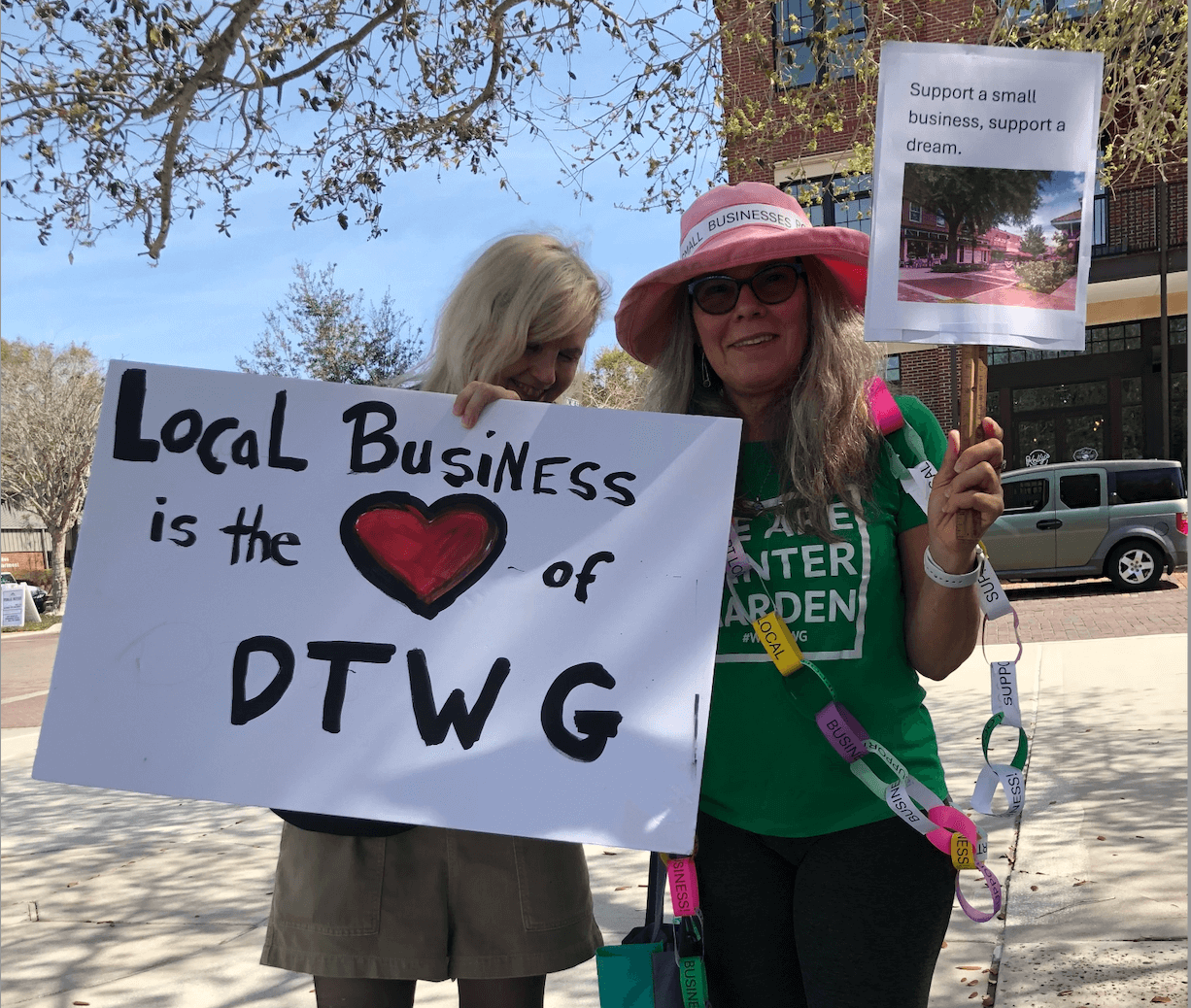
On Feb. 20, a small band of residents rallied in support of local businesses and marched to city hall to deliver a message to City Manager Jon Williams, Mayor John Rees and the commissioners to protect the “uniqueness and charm of downtown Winter Garden.”
Rees said during the city commission meeting that when he spoke with Larweth, the pharmaceutical executive indicated that he wanted to “restore” the buildings.
“ He pulled out on his phone when he was talking about a couple of the buildings, like the Edgewater or Tony's, let's say. He pulled out on his phone. I had no idea how many hours he spent at the Heritage Foundation. He has some pictures that, I'll be honest with you, I don't remember,” the mayor said. “But he says he wants to restore it. So we just want to see it.”
Still, beyond that conversation with the mayor, Larweth has said nothing publicly about his plans. In the absence of information, uncertainty and uneasiness has grown among residents.
VoxPopuli left a voicemail asking Larweth if he was aware of the city commission meeting and resident concerns, but did not receive a response.
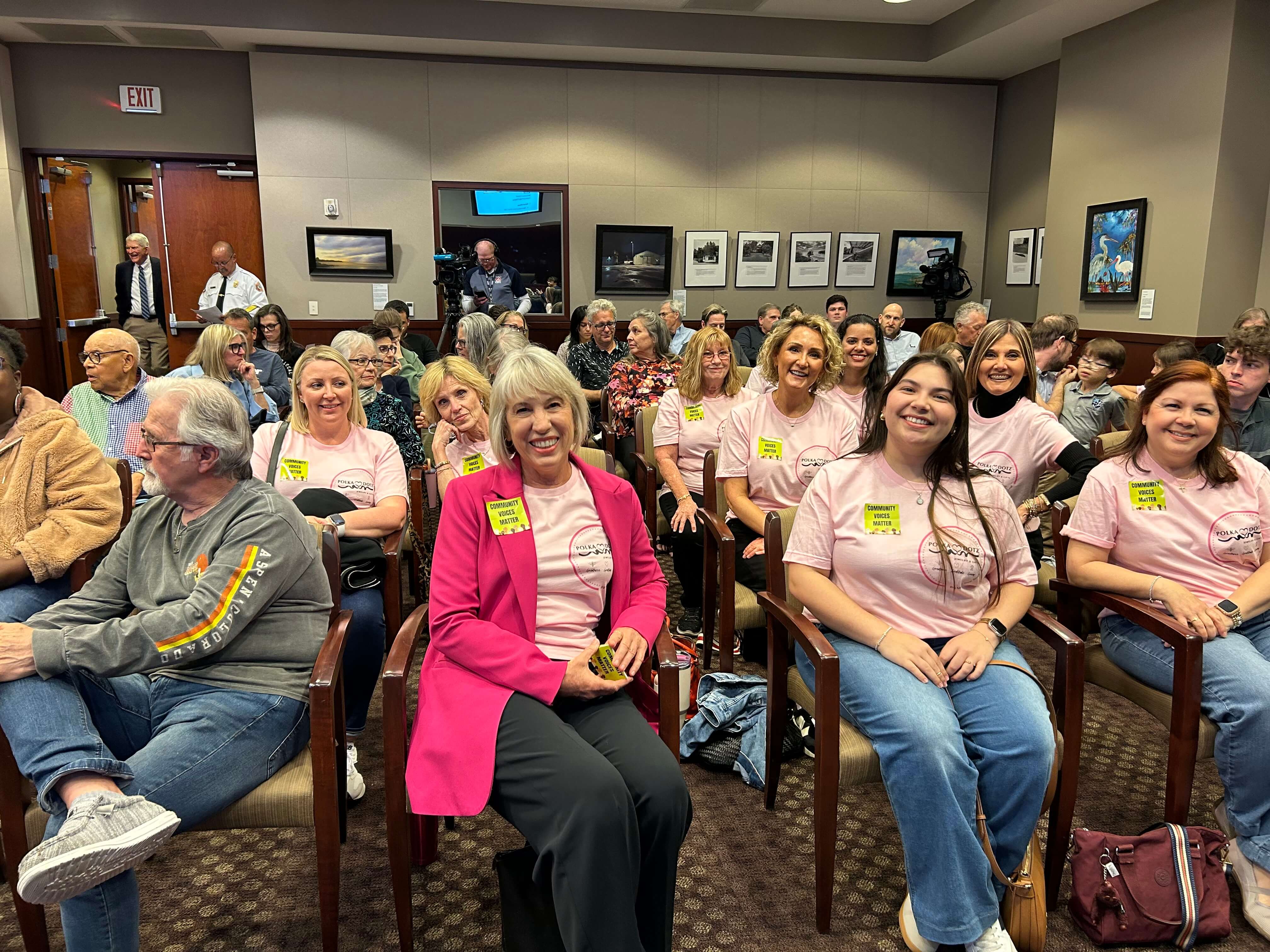
“ We have been an integral part of the fabric of this community,” Heidi Hardman, owner of Polka Dotz, said during public comment. She was accompanied in the commission chambers by a crew of supporters in pink Polka Dotz T-shirts with “Community Voices Matter” on the back. They passed out “Community Voices Matter” stickers to all the people around them in the crowd.
Although she lives in Oakland, Hardman said her business has been in Winter Garden for 19 years. “We have employed hundreds of local residents, supported all the local events, local charities. I even started my own pet rescue here at Polka Dotz. … I came here again for the vision of this community, not to support a legacy of small business annihilation, resident disrespect and the destruction of our community.”
Before she yielded the mic, she played Bon Jovi’s “We Weren’t Born To Follow” from her phone.
Some residents expressed concern that the Larweth properties would be left vacant.
“ I think we need to be alert to the fact that there is some empty property and how are we going to proceed to make sure that we don't have more empty property and that the owner is actually doing due diligence and making an effort to lease out this property in a way that kind of fulfills what the town has been all along,” said Sheri Heitker, a Winter Garden resident.
Katie Bush said she noticed homes in her area “often sit vacant” after they’ve been purchased and renovated. She suggested the city institute a vacant property registration program where fees increase the longer the property remains empty. She said “ownership carries a civic responsibility,” and that even if cared for, “concentrated vacancies stifle our community by limiting opportunities for potential residents.”
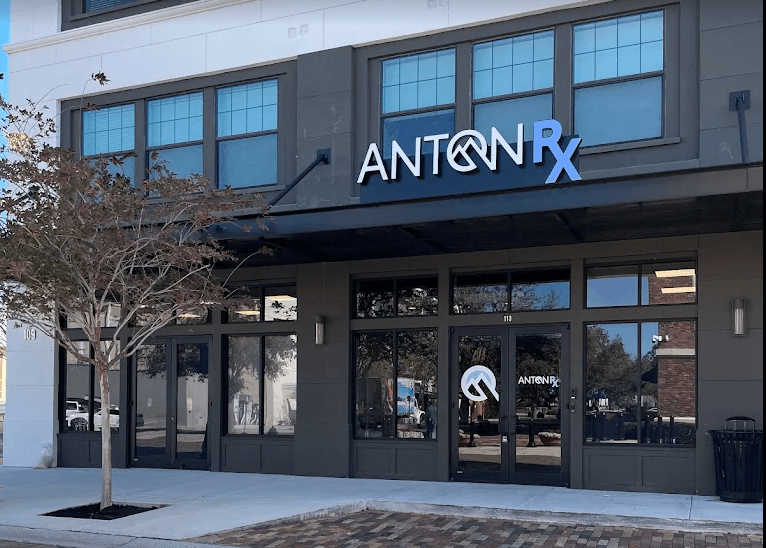
Taylor Boyer, a Winter Garden resident and educator, who was concerned how zoning regulations might be altered to accommodate Larweth’s properties, told the commission that seeing Anton Rx’s name as a sponsor on one of the stages at the Winter Garden Music Festival “felt like a slap in the face to our community.”
“Aligning with the developer who has not engaged authentically at all with residents sends the wrong message about whose interests are being prioritized,” she said. “As a city, we cannot be pushed out. We cannot be quietly bought. This town is relationships, memories and small businesses that give our downtown its heartbeat. If this new property owner truly wants to be welcome, the path is clear transparency, open dialogue and meaningful engagement with the people who already call this place home.”
Winter Garden resident Cheri Janetskze begged the commission to “use the tools you have in your hand” — which she identified as political leverage, incentives and marketing — to “help Larweth see that his best avenue is to work with this commission to keep this city what it is today.”
Even before the public comment period got going, Kelly Carson, Winter Garden’s planning director, tried to reassure meeting attendees that the city is “well-positioned under federal and state law to protect small, independently owned businesses versus those national corporate chain stores.”
Carson walked residents through a presentation that detailed what the city is able to do legally, to protect the downtown area.
“Nobody here at city hall wants to lose the small-town charm and character that Winter Garden is known for,” she said.
Carson said they didn't want to see national chain stores displace the unique businesses in the historic distict, but legally, the city could not ban them. That would interfere with a property owner's rights to sell or lease their property to whomever they wish. However, she indicated that the zoning regulations and various requirements involved with setting up shop on a historic streetscape can be enough of a nuisance that chains, with requirements of their own, simply won't bother.
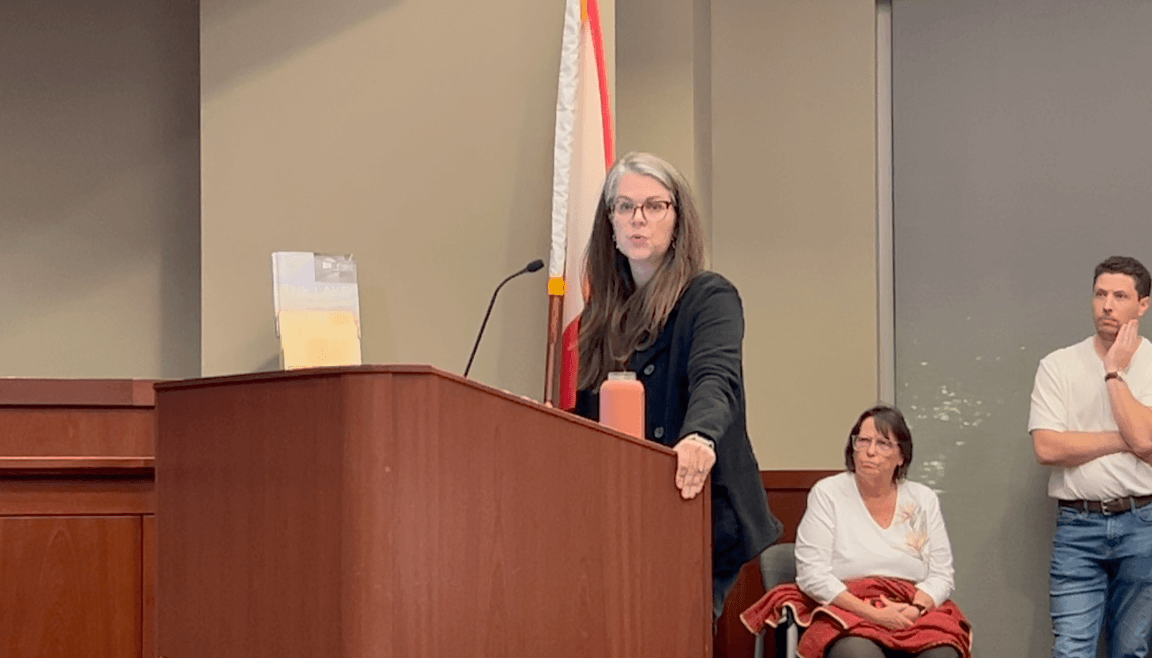
“These are businesses that have a very strict corporate structure on how their buildings are supposed to look, how their branding is supposed to look, the types of colors they can use on their exterior and their interior. They're very specific, and so when they come into a historic downtown with all these other regulations, sometimes those standards don't meet, and so they choose not to open up here,” Carson said.
“For instance, we can't say there can never be a McDonald's downtown, but what we can say is, The building needs to look this way. And Oh, that sign isn't gonna work because we have more specific signage standards. And you can't put a drive through downtown. And so they'll say, Well, it doesn't work for us, so we're not gonna open up our business here. This preserves the small town character without violating any of the laws.”
Plans for new buildings and modifications to existing buildings must also go through the Architectural Review and Historic Preservation Board, which Carson explained is comprised of representatives of the Heritage Foundation, local property owners, business owners and other community stakeholders.
The city also has a historic district overlay code in place along with a manual of historic district standards and guidelines that Carson said is even more precise. It regulates the style of building that can be built, the modifications to historic buildings that can be made, right down to “the type of awnings you can have on your building.”
Carson noted that Winter Garden’s codes are more stringent than other historic areas like Mount Dora, Clermont and Winter Park. Even so, she said, city staff would seek to strengthen the codes where they could. She pointed to revising the historic district overlay code to include buildings that weren’t considered “historic” the last time the code was updated about 15 years ago. Since then, many may have become historic and can now be protected, she said.
“We have a lot invested in our community,” said Mayor Rees. “I have my whole life invested in this community. We all take everything that goes on here seriously. We started back in the ‘90s … [and] have worked very hard in creating what we have here today. I think we all love what we’ve got, and we want to maintain that.”