"Local news worth reading" — The New York Times
SUBSCRIBE
The independent voice for West Orange County news
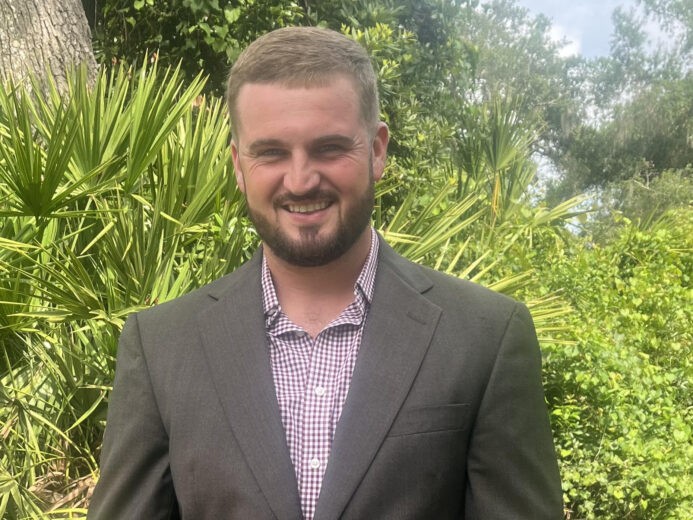
Michael Lincoln-McCreight says he’s a dedicated activist, someone who’s built his reputation on inclusion, equal treatment and greater accessibility for people with disabilities like himself.
The 30-year-old Lincoln-McCreight (pronounced muh-crate) aims to become the first person with autism spectrum disorder elected to the Florida House.
But, as a first-time candidate, and the sole Republican to date running for House District 41, his campaign has been overshadowed by a viral video that shows him yelling a racial slur that has raised questions about his candidacy. The campaign finance database, maintained by the Florida Division of Elections, shows he has raised $0 for his campaign.
Last year, a few weeks after the Metro West resident filed paperwork to run, a TikTok video surfaced of him using the N-word.
It showed Lincoln-McCreight, wearing a Gryffindor T-shirt, screaming the epithet at a Black 7-Eleven employee, who recorded the incident and later posted it on her TikTok account. The since-deleted video shows him repeatedly harassing her and demanding she delete the video. He picks up items off the counter, throws them and storms out, yelling, “F—k you, [N-word],” before returning to pound on the store window.
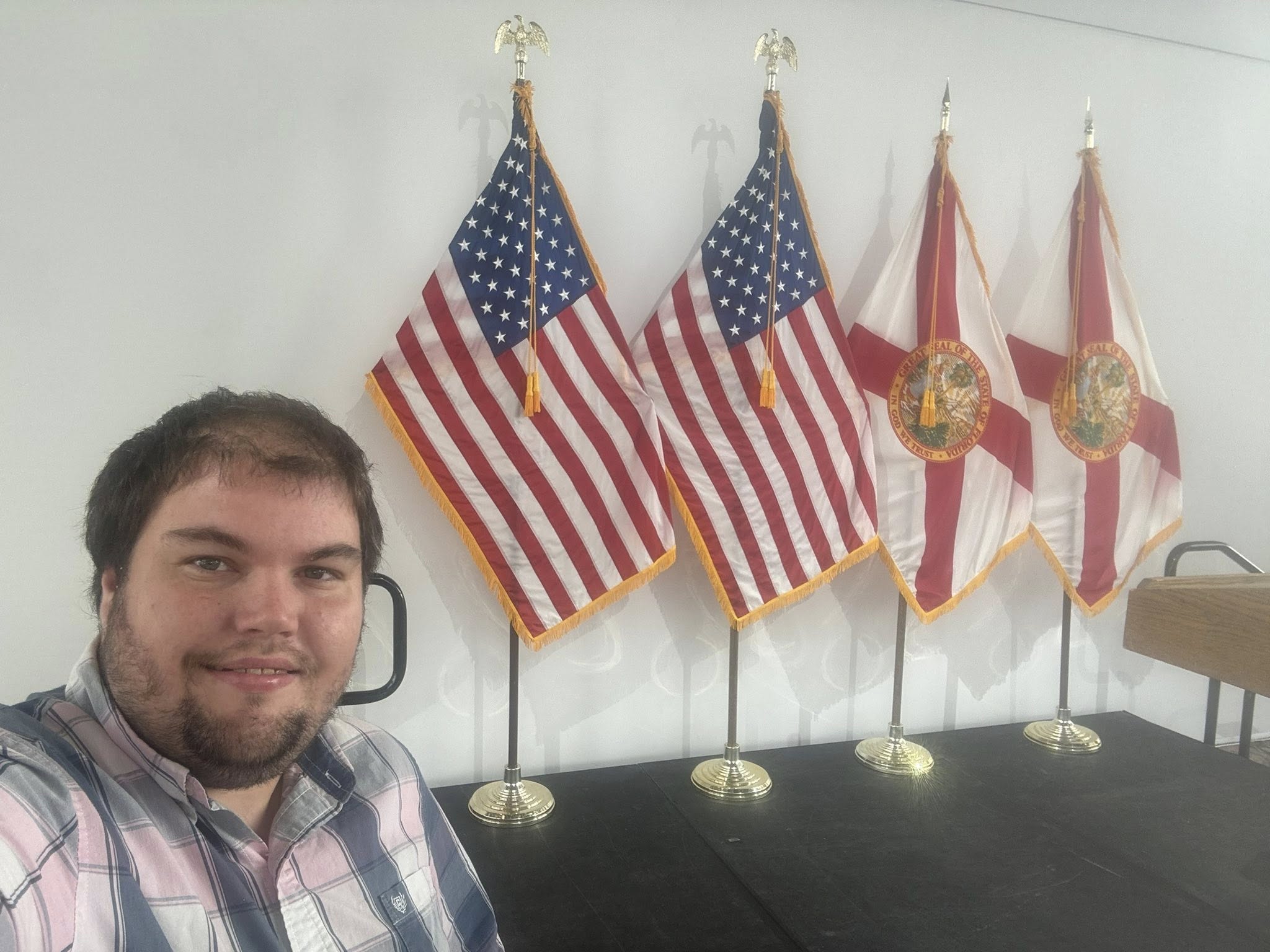
In a recent interview with VoxPopuli, Lincoln-McCreight addressed the video, which went viral after being reposted by multiple social media accounts.
“That was several years ago, before I decided to run for office and before I was even mature,” he said. “People with autism have verbal outbursts, that’s all there is to it… That’s not the real me. I grew up in Fort Pierce, surrounded by African-American people, and I have African-American friends.”
Lincoln-McCreight said he doesn't “really remember,” when the incident occurred. He went on to apologize for the episode and insisted he will make amends through his advocacy.
“That’s the only negative story out there [about me] on the internet. I’ve done nothing but positive for the community… I’m sorry for how that looked. I understand that hurt the community, but I will do everything I can to rebuild the trust for the community and be the advocate they want me to be.”
In response to the video, Orange County Senior Public Information Officer Kelly Finkelstein told News 6, “Orange County is aware of the video, and the County Attorney’s Office is reviewing its content and will advise on next steps.”
Lincoln-McCreight said that he resigned from the Orange County Disability Advisory Board as a result of the controversy. Vox Populi reached out to Nicola Norton, program manager for the Orange County Americans with Disabilities Act, for comment, but has not gotten a response.
Meanwhile, Lincoln-McCreight would like nothing more than to change the subject from the Tik-Tok video and talk about his campaign.
The HD 41 seat is currently held by Democratic Rep. Bruce Antone, who told VoxPopuli that he will run for re-election. Antone, 65, has been serving District 41 since 2022. Before that, he served District 39 from 2002 to 2006 and then District 46 from 2012 to 2020 when he was term-limited.
Along with Metro West, District 41 includes part of Ocoee as well as neighborhoods of Parramore, Orlo Vista, Oak Ridge and Washington Shores, a largely African-American, mostly working-class community.
Antone will face Jane’t Buford-Johnson in the Aug. 18 Democratic primary. At the moment, Lincoln-McCreight is unopposed in the Aug. 18 Republican primary.
The general election will be held Nov. 3. State representatives serve two-year terms and earn $29,697 annually. (Antone previously sponsored legislation studying whether lawmakers’ salaries should be increased; salaries have not changed substantially in more than 30 years.)
Lincoln-McCreight told VoxPopuli he launched his campaign partly out of frustration that Antone is not accessible as a representative, adding that the representative doesn’t attend public events.
“There was an Agency for Persons with Disabilities listening session, where many elected officials were there, except for Bruce Antone,” Lincoln-McCreight said.
Antone told VoxPopuli that when he’s unable to attend a meeting, his secretary goes in his place. He also gives out his phone number so that constituents can reach him with concerns. And in fact, Lincoln-McCreight has sought him out, Antone said in a Monday phone call.
“I have met with him twice in probably the last three weeks in Tallahassee. Once with him and his girlfriend, and then I think just this last week,” Antone said. “I said, Man, I saw the N-word tape. That was interesting. He says Oh, that was two years ago. And then he asked me to try to help him get back on the Disability Board by calling the Mayor’s Office … because they had ruined his reputation.”
Antone added that when he met Lincoln-McCreight at an Orange County Delegation meeting in the fall, his opponent told him, Hey, it’s nothing personal, I'm not running against you. I'm just trying to bring attention to disability issues. “And I said, Okay. Works for me.”
State Rep. Dana Trabulsy, the Fort Pierce Republican who represents House District 84 where Lincoln-McCreight grew up, is his role model.
Trabulsy co-sponsored House Bill 73, which helps individuals with disabilities make independent decisions and avoid abusive guardianships like the one Lincoln-McCreight got trapped in as a young adult. It became law in 2024.
“I’ve always said to myself, I want to be like her,” he said.
Lincoln-McCreight’s activist journey began in 2014 when he turned 18 and aged out of a foster home. At that point, a professional guardian filed a petition claiming he still needed a caretaker. A judge then declared he was incapable of making his own decisions or caring for himself. This ruling forced him into a group home managed by his guardian.
Under guardianship, the court appoints a “surrogate decision-maker… to make either personal and/or financial decisions for a minor or for an adult with mental or physical disabilities." This removes a person’s rights to manage their own affairs.
Lincoln-McCreight said he never knew why the petition was filed in the first place, nor why the judge decided he was incapacitated. Still, that decision left him with a guardian who had legal authority to control every aspect of his life and went on to abuse him during the next two years.
“I had all my rights taken away. The right to vote, the right to get married, the right to choose where you want to live, everything,” said Lincoln-McCreight. “I was basically being held hostage from my family and friends, cleaning feces off of mattresses and also having to restrain other individuals with disabilities in a group home.”
When family and friends came to visit or check up on him his guardian would find reasons to not let them in. Lincoln-McCreight said one time his guardian even lied about taking him to a doctor’s appointment to prevent a meeting with an attorney that was trying to get him out.
In 2016, as he told CBS 12, he asked his guardian for $60, saying he wanted to buy a book. He actually bought a cheap cell phone, hid it in a closet and on the advice of a friend’s mother, called Disability Rights Florida. The organization connected him with a lawyer who helped him fight back. A judge determined he was wrongfully declared incapacitated and terminated his guardianship, replacing it with a supported decisionmaking agreement.
Supported decisionmaking is a formal agreement in which an individual chooses people in their life to help them make decisions and details which parts of their life they want support with. The agreement enables the person with the disability to make their own decisions, with the support of those they trust.
Before Lincoln-McCreight, no one in Florida had successfully replaced their guardianship with supported decisionmaking.
His experience led him to fight for other people with disabilities. Over the last few years, he has been an advocate for supported decisionmaking, including helping to lobby for HB 73 to pass the Legislature. The law requires a court to consider the needs of a person with disabilities and determine if less restrictive options are sufficient before assigning a guardian.
If elected, Lincoln-McCreight said he plans to fill the majority of his legislative staff positions with people with disabilities.
“There’s not a lot of job opportunities for people with disabilities, so it will also help people with special needs get jobs,” Lincoln-McCreight said.
Tops of his legislative agenda is a bill that would create a “guardianship audit,” which would review active guardianships to ensure they are necessary and, if not, to terminate them. Such a program could help curb abuse and help restore people’s rights.
Lincoln-McCreight also wants to expand low-income housing options. This is especially important, he said, since Orlando has a large homeless population and many are dealing with disabilities, including mental illnesses. Of the 2,800 people who lack reliable housing in the 2025 Point-in-Time Count — which tallied the number of people experiencing homelessness across Orange, Seminole and Osceola counties on a single night in January — roughly 21 percent have a serious mental illness.
In another study, The Shimburg Center for Housing 2025 Annual Report, about one-third of the 900,000 low-income, cost-burdened renter households in Florida — meaning they make less than 60 percent of the area median income and spend more than 40 percent of their income on housing — had at least one person with a disability.
Lincoln-McCreight’s solution is to expand Section 8 housing, also known as the Housing Choice Voucher Program, and keep the program applications open longer. Without the opportunity to get housing aid, Lincoln-McCreight said seniors and people with disabilities “are going to flood the streets.”
“When they open Section 8, they open it for an hour and then close it. That needs to be opened for a week or two, or even a month,” he said.
That’s not what the Orlando Housing Authority told VoxPopuli when we asked how long applications are open. An OHA employee, who declined to give their name, said, “We really don’t have any way of knowing [how long applications will be open].” Applications are only opened when current clients leave the program, which doesn’t happen often. Applications opened twice in the last 10 years — once in 2015 and once in 2021 — according to the Orlando Sentinel. Applying for Section 8 puts eligible applicants on the wait list where people can languish for years waiting for one of the few thousand housing vouchers that the Orlando Housing Authority has available.
Expanding public transportation with more bus stops and bus routes is another high priority. Lincoln-McCreight notes that people with disabilities rely heavily on public transportation because many cannot drive.
There are 68 LYNX bus routes throughout Orlando and three LYMMO bus lines in the downtown area. But a Metroplan Orlando 2024 Regional Transportation survey of Lynx bus riders found that buses did not “run frequently enough” and the pick up/drop off times were “inconvenient.” Forty-four percent reported they missed doctors’ appointments because they were without reliable transportation. Lincoln-McCreight hopes that increasing the frequency of pickups, adding more bus stops and expanding bus routes, can address these concerns.