"Local news worth reading" — The New York Times
SUBSCRIBE
The independent voice for West Orange County news
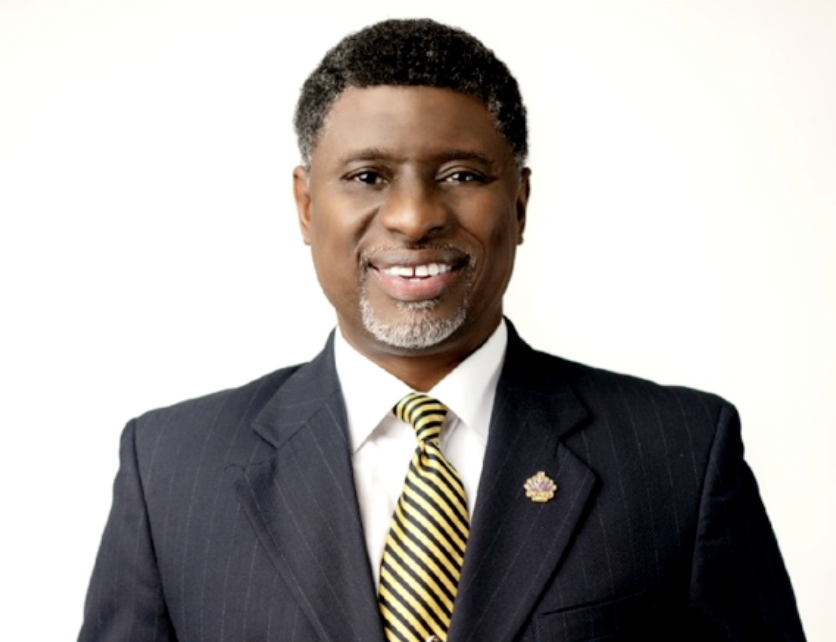
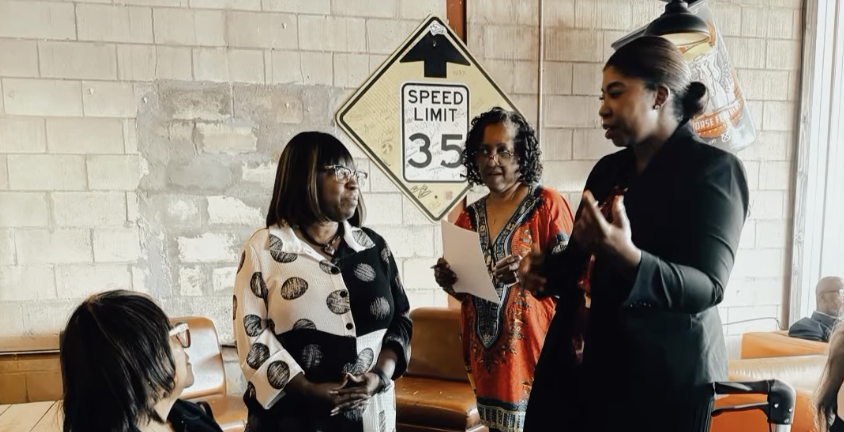
Kamia Brown officially kicked off her campaign for Orange County District 2 Commissioner at Odd Guys Brewing in Apopka with a late March event that had the vibe of an indoor picnic.
As friends, supporters and family sipped sweet tea and lemonade and helped themselves to platters piled high with fried chicken, the former state representative, a Democrat, explained why she wanted to leave her job as a healthcare policy worker and dive back into politics.
“Every morning when I look at my son, I think about the kind of future we're building for him right here in Orange County,” Brown, 45, said. “That's why I am here tonight, because I believe that Orange County should work for the people who live in it.
“I have spent my entire career delivering results to what I consider my community, and I know at this time we're at a turning point. More importantly, I'm coming back as the mom of a five-year-old … How am I preparing a world for my child to live in, a future for him in the area that has raised me?”
A single mom who’s lived in Ocoee for the last 10 years, Brown moved to the “city of good living” in 2016 to care for her now 89-year-old grandmother who she described as her inspiration for her “resilience, faith and the strength of community.” Now the question of how she is preparing the world for her own child to inhabit is the one that has defined Brown's vision and campaign for District 2.
The work she began in the Florida House isn’t done, Brown told VoxPopuli in a recent phone interview. She said she sees the election for District 2, which includes Apopka, Ocoee, Paradise Heights, Tangerine and Zellwood, as an opportunity to take her skills as a legislator and use them to work locally on housing, infrastructure, healthcare and jobs.
Brown faces Apopka private-practice attorney Marsha Summersill and Ocoee City Commissioner George Oliver III in the nonpartisan Aug. 18 election. (If no candidate receives more than 50 percent of the vote, a runoff will be held Nov. 3.) Of the three, according to campaign finance reports, Oliver is winning the dollars race, having raised just shy of $55,000 and with the majority of it still in reserve for the campaign ahead. Summersill raised about $12,000, but has spent nearly $11,000 already. Brown brought in just over $13,000 and spent less than $1,000.
The qualifying period for the election takes place from noon on June 8 to noon on June 12. To get their name on the ballot, candidates must pay a qualifying fee of $4,948.81 or collect 1,046 verified petition signatures. County commissioners serve overlapping four-year terms and earn an annual salary of $123,720.
The District 2 seat was held by Orange County Commissioner Christine Moore, now running for Apopka mayor.
Born in Orlando, Brown primarily grew up in West Orange County. She attended West Orange High School for 9th and 10th grades, then transferred to Jones High School for her junior and senior years so that she could continue her family’s tradition, set by her grandmother, parents and aunts, of graduating from there.
Brown went on study political science at Florida A&M University where she interned with former State Rep. and State Sen. Arthenia Joyner when she represented an eastern Tampa district. After graduating in 2003, Brown got her start as a legislative aide working with Democratic State Rep. Bruce Antone to “serve the community that helped raise [her.]”
For nearly 14 years Brown served as a legislative aide and staff member to elected officials from Duval, Miami-Dade, Broward and Orange counties, which she said gave her the opportunity to see the “uniqueness of different communities statewide versus just through the lens of living in Orlando.”
Encouraged by her experiences as a legislative staffer, Brown ran for and won her first bid for the House District 45 seat in 2016. She spent three consecutive terms in the Florida House (2016 to 2022), representing the old District 45 (before the 2022 redistricting), where she worked to pass legislation to safeguard maternal health and redress the Ocoee Massacre with a scholarship program for descendants of survivors and Black high school graduates pursuing the next phase of their education.
From 2020 to 2022 she served as House Democratic Leader Pro Tempore. In 2022, she was elected as chair of the Florida Legislative Black Caucus.
She ran for State Senate District 15 in 2022, but lost in the Democratic primary to the late Sen. Geraldine F. Thompson.
Following her defeat, Brown channeled her healthcare advocacy efforts into the insurance sector, working as senior director of healthcare transformation for Sunshine Health, which offers government-sponsored managed care plans. In June, she moved to the Foundation for Sickle Cell Disease Research as its director of governmental affairs working to expand access to care across the state. Approximately 100,000 people in the U.S. have sickle cell disorder, which primarily affects Blacks and Latinos, according to the Sickle Cell Disease Association.
As she seeks election to the county commission, Brown is focusing her campaign on the county’s housing crisis, zeroing in on “attainable housing,” as opposed to “affordable housing.”
“Because [housing] can be affordable, but affordable to whom? Orange County, along with so many other areas, has been in a housing crisis, and people feel that every single day,” she said in the interview. “These are folks that are working. We have teachers, healthcare workers, first responders who can't even afford to live in the community that they serve.”
She added that one of her biggest “pain points” is seniors’ inability to age in the homes or communities they’ve built. That’s something she wants to change along with working with local developers and evaluating how the county is using its housing fund and partnering with housing programs already in place.
Another “pain point” for Brown is finding balance when it comes to infrastructure, as she wants to prioritize “smart growth” to develop communities for residents while maintaining parks, greenspaces and waterways.
“Growth is not a problem — the problem is unmanaged growth and how we align development with infrastructure,” Brown said. “… How are we looking at roads, at drainage? How are we looking at public safety? How are we looking to expand our schools?”
She said it's helpful to see how other communities have been able to evaluate and address these issues. “We see what Winter Garden has done, right? We see what Oakland has been able to build, and so many other communities as well … but how are we looking at all [these elements] at the same time and bringing everyone to the table to deal with these issues?”
Health equity is another priority for Brown who gets how community infrastructure can impact well being.
“[We need to be] making sure we help the whole person and that includes access to housing, access to health care, workforce training, because it deals with those social determinants of health,” she said. “... It's bigger than survival. We want folks to be able to thrive in their communities and engage in their communities.”
For a community to thrive, it must have a leader who is willing to listen to the people living within it, she said, adding that that's what she will do if elected.
“What you get in me is a neighbor. What you get in me is a friend, what you get in me is a sister … I love my community and I want to serve it, so put me to work.”