"Local news worth reading" — The New York Times
SUBSCRIBE
The independent voice for West Orange County news
As they say, “the third time’s the charm.” Windermere unanimously voted last week to adopt the most recent version of its 2045 Comprehensive Plan after months of negotiating with the Florida Department of Commerce about language and two failed submission attempts.
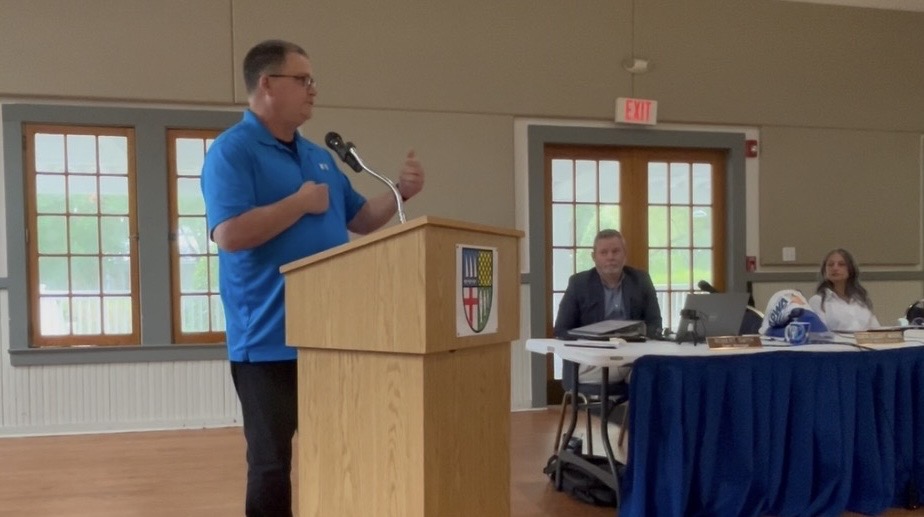
“It's been quite the journey with the State of Florida with this plan,” Town Planner Brad Cornelius said during the plan's final re-adoption hearing at the May 12 town council meeting.
Windermere initially submitted its updated 2045 Comprehensive Plan to the Florida Department of Commerce in May 2025. The town received a “letter of no objections and no comments” and was told to adopt the updated plan within 180 days of July 5, 2025, which it did on Oct. 14. The plan was submitted to the Department of Commerce one last time for “final compliance determination.”
That’s when things started getting weird.
In December 2025, the town received a letter from the Department of Commerce stating it was out of compliance with Senate Bill 180.
Senate Bill 180, signed into law in June 2025, prevents municipalities in counties that were declared federal disaster areas after Hurricanes Debby, Helene and Milton from adopting moratoriums on re-development of damaged property and adding amendments or provisions to a city’s comprehensive plan or review procedures to site plan approval processes that are more “restrictive or burdensome” than what existed prior to Aug. 1, 2024.
According to the Department of Commerce letter received by the town, only one change in Windermere’s comprehensive plan was found to be more “restrictive or burdensome” — changing the word discourage to prohibit, with regard to limiting the conversion of residential properties to non-residential uses.
“Because [the letter said] we changed the word discourage to prohibit on one policy and one objective, we were in violation of Senate Bill 180 and that we had to re-adopt our comprehensive plan,” Cornelius said.
Cornelius told VoxPopuli he “strongly objected” to the non-compliance finding.
“In their letter to us when we adopted [the comprehensive plan] it said, We have no objections. We have no comments. We have nothing. And then I get this letter after we adopt it,” he said.
He then reached out to James Stansbury, Chief of the Bureau of Community Planning and Growth at the Department of Commerce. Cornelius said he told Stansbury the department’s finding was “wrong,” noting that the town received a signed letter stating there were no objections to the plan and that state statute prohibits the department from finding municipalities non-compliant for issues not raised in the original letter.
“But when I said that, the response I got from James in Tallahassee was, Yeah, but that doesn't include Senate Bill 180 issues. We can do it whenever we want to do it,” Cornelius said.
Ultimately, Cornelius said, town staff determined that it would be more “efficient” to simply change the wording back to discourage and resubmit the proposed amended plan a second time to the Department of Commerce in February. He noted that reverting to the original verbiage “won’t harm the town in any way.”
“It is not feasible for anybody to convert one of these residential properties on these main roads to commercial, because we don't have the utility infrastructure, they're not large enough to have parking,” he added. “It just won't happen.”
Windermere isn’t the only local government that’s been forced to contend with the state Department of Commerce over Senate Bill 180. In September, the City of Ocoee pushed back against a claim by the state that its new comprehensive plan, Envision 2045, contained more “restrictive or burdensome” development provisions rendering it null and void ab initio, which means it never existed.
In Ocoee’s case, City Attorney Daniel Langley responded in a Sept. 8 letter that the department’s claim was “incorrect” and that it lacked the “authority and jurisdiction” to make the determination. The city requested an administrative hearing, and in November an administrative law judge confirmed that the Department of Commerce had no legal authority to make any determination about Ocoee’s comprehensive plan.
The difference between Windermere and Ocoee’s situations, however, is that the city was able to challenge the state commerce department’s position because Envision 2045 includes an opt-out clause that allows developers to build under the previous comprehensive plan if desired.
“My understanding is the way [Ocoee’s] was structured, it was an optional element where people had to choose to go into it,” Cornelius said. “That’s not what we did … In our case, we went from discourage to just outright prohibit, so that's the difference between the two.”
In an April 27 letter, the Department of Commerce again notified Windermere it had no objections to the proposed amended plan and directed it to move forward. But Cornelius told town council members he was "surprised" that the letter included still more comments about three other policies regarding the town's tree ordinance, potable water and septic systems. According to the letter, the town was advised to seek the town attorney’s opinion on whether those could be considered “more burdensome or restrictive.”
“They raised three more questions, but they weren’t objections,” Cornelius said. Town Attorney Heather Ramos determined those policies were not “more burdensome or restrictive” under SB 180.
The Department of Commerce now has 30 days to review Windermere’s third comprehensive plan submission for final compliance approval.
“They shouldn't say anything this time, but I'm not going to guarantee it because who knows what happens in Tallahassee,” Cornelius told council members. “But they shouldn't. And then, we'll have the new comprehensive plan.”