"Local news worth reading" — The New York Times
SUBSCRIBE
The independent voice for West Orange County news
Ocoee city officials are proposing a new fire assessment formula that would replace the current square-footage system with a flat fee for single-family homeowners while substantially increasing costs for apartment complexes and other non-residential properties.
Under the proposal, most homeowners would pay a flat annual fire assessment of about $341, roughly the same amount they currently pay under the square-footage formula.
City officials say the changes are needed to keep up with rising fire department costs and uncertainty about possible state property-tax reforms, which could severely reduce revenues. Fire assessments are separate from traditional property taxes and are charged specifically to help fund fire protection services.
During the May 19 commission meeting, City Manager Craig Shadrix said Gov. Ron DeSantis is calling for a special legislative session later this summer to reform property taxes, but it’s unclear what lawmakers will do.
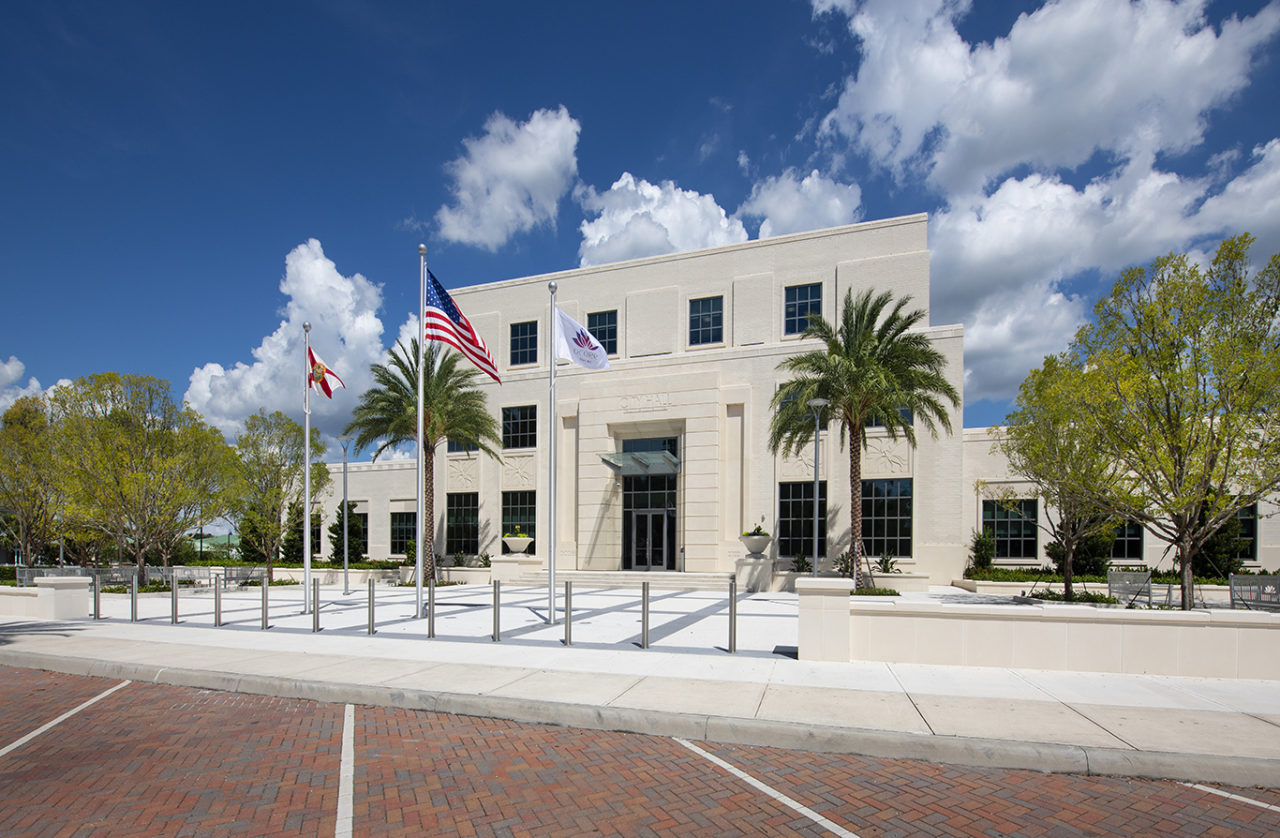
“We're playing a game of unknowns right now, and we're trying to do a lot of things,” said Shadrix. “And you'll see things as we advance toward the budget workshops that we're trying to streamline as much as we can. But it's important to note that we could be facing some significant reductions in the revenues that we use to provide city services.”
On Tuesday, the commission unanimously approved an initial rate resolution for what’s called the “demand-availability” methodology, which bases fire assessment fees on the fire protection required by different properties rather than square footage. Shadrix said it was a “more equitable” system for all property owners.
Commissioners are expected to revisit the proposal on June 16 before notices are mailed to property owners and public hearings are held later this summer.
For the current fiscal year, which ends Sept. 30, Ocoee imposed a fire service assessment rate of $139.23 per fire protection unit, doubling the previous rate, which had been in effect for more than a decade. Over the last year, the rate, which was based on a property’s square footage, generated nearly $5 million in revenue and covers about 36 percent of the fire department’s current $13.7 million budget.
The $139.23 rate was adopted for one year so the city could review costs and service levels before determining whether a fire assessment could fully fund the department. The one-year adoption with review was a compromise the commission made with residents angered by the 100-percent fee increase. Rumer said during the meeting that relying on assessment fees to fully fund the fire department wasn’t feasible.
More than 90 percent of Ocoee residents pay between $205 and $342 under this square-footage approach. But Rumer said this formula benefited non-residential properties — commercial, industrial and institutional properties, like city and nonprofit offices, and apartment complexes — more than single-family homes.
“So, we wanted to look at a methodology that provided a shift in the burden from residential to the non-residential,” he said.
A 320-unit multifamily apartment complex paid $8,000 under the square footage-based method. Under the proposed demand-availability mode, the fire assessment fee for the same complex would increase to $55,000.
With the assistance of city consultant Anser Advisory, Rumer said they concluded that the demand-availability model provided “across-the-board fairness.”
“We feel this methodology provides the best benefit for lessening the burden on residential. It apparently brings the commercial and industrial up to a more fair-share rate.”
Under the methodology, he said 91 percent of Ocoee residents would pay a flat fee “pretty close to what they’re paying now.”
Shadrix added that the methodology is “legally defensible … Because we don’t want to put anything out there that’s challengeable.”
He urged commissioners to adopt this approach, otherwise, with further budget cuts and lower revenues in the future, he said he would come back to ask for a millage rate increase.
“And we’re not recommending a millage rate increase tonight because we believe we can buy some additional time with what we’re proposing,” he said.
Asked by Commissioner George Oliver III, how many years he was talking about, Shadrix estimated the new methodology would cover 40 percent of the fire department’s budget for five years.
“And that’s making a lot of assumptions because we still don't know what is going to happen in August,” he said, referring to the state’s anticipated tax reform changes. “Really, all we're able to tell you is that this buys you time in a vacuum without knowing what the other impacts are."
Still, any new rate won’t cover the entire Ocoee Fire Department budget.
“It’s not even going to get close to covering 100 percent of our projected fire budget,” said Shadrix, who explained that rising personnel, recruitment and equipment costs continue to drive up the department’s budget each year.
For example, he said that Ocoee firefighters are required to wear protective clothing free of polyfluoroalkyl substances, or PFAS, often called “forever chemicals” because they persist in the environment and human body. Shadrix said that has resulted in “exorbitant increases” in the cost of basic equipment.
Additionally, he said the city has approved $600,000 for life packs, which are portable cardiac monitor/defibrillator units, $20,000 radios, and $1.7 million for a fire engine, which cost less than half that just six to seven years ago.
“We’re chasing a moving number that’s getting bigger year in, year out,” said Shadrix. “There's nothing we can do about that because when it comes to life-saving measures, you've got to have the right equipment. You've got to have everything that they need to provide the level of service they provide.”
But city officials said their long-term planning is complicated by uncertainty in Tallahassee over possible property-tax reforms.
While DeSantis initially floated the idea of eliminating property taxes entirely on residents’ homesteads, or primary residences, state legislators countered with proposals, including expanding homestead exemptions and ending non-school homestead property taxes.
One major House bill, which proposed a constitutional amendment and died in the Senate Appropriations Committee, would have gradually increased homestead exemptions from all non-school ad valorem taxes over a 10-year period, reaching full exemption by 2037.
At the Ocoee meeting, Rumer said a $100,000 increase in a homestead exemption would reduce the city’s ad valorem tax revenue by $2.5 million. If the exemption were raised to $300,000, that would result in a $9 million reduction in revenue, he said.
Shadrix anticipates that any tax reform proposal that makes it to the ballot “will most likely pass.”
“It’s a very scary time at this point,” said Commissioner Rosemary Wilsen, referring to tax reform.
“We have no choice. We want our fire, we want our police, we want all the city services that we have here, and we do not want to see a reduction in that,” she said. “So again, we as residents are going to have to realize that we're going to pay for some of these things.”


