"Local news worth reading" — The New York Times
SUBSCRIBE
The independent voice for West Orange County news
Running a Florida election in 2026 means planning for hurricanes, new redistricting maps and overhauled mail-in ballot rules. It also means preparing for situations that would have seemed unthinkable just a few years ago: What do you do if ICE agents show up at the polls? And how can you tell if the person with the gun outside the polling location is exercising their Second Amendment rights … or trying to intimidate voters and prevent them from voting?
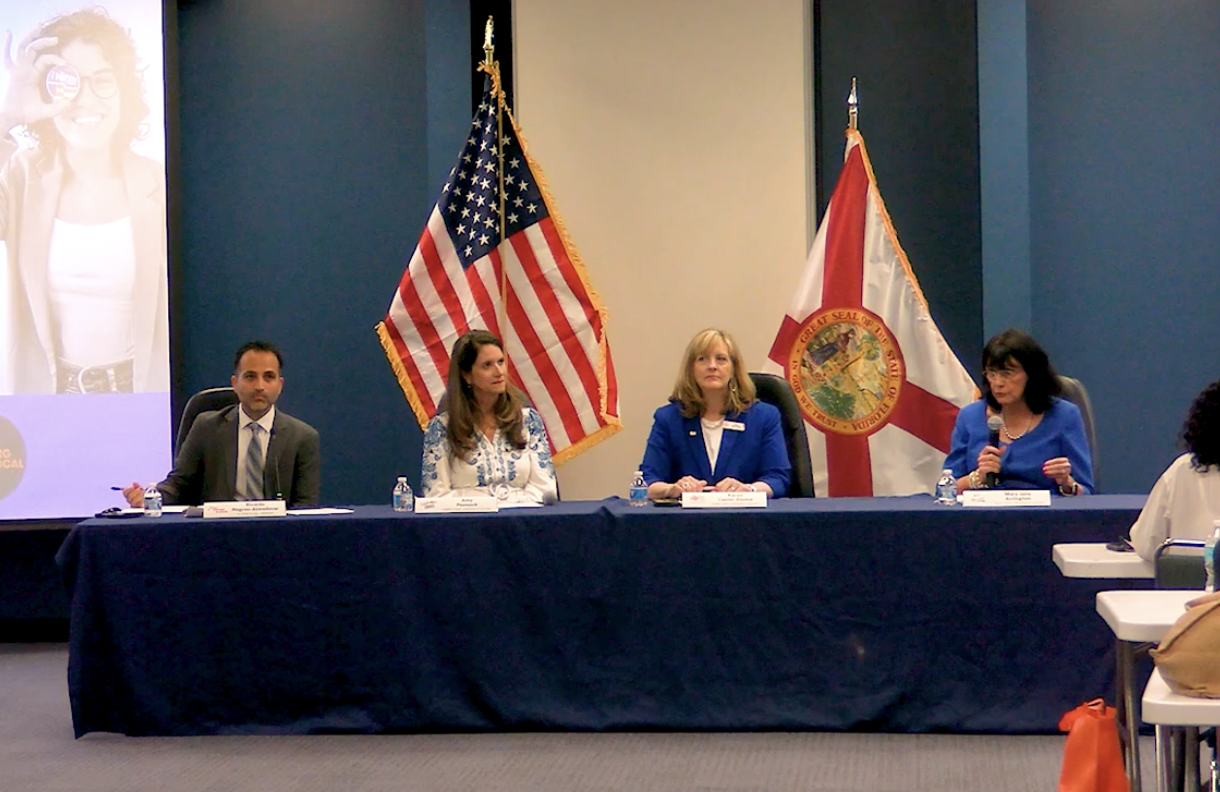
Three supervisors of elections gathered last week for a public panel where they talked through those issues, describing a web of security partnerships, training protocols and contingency planning that reflects the expanding security demands of their jobs as they prepare for the 2026 primaries and midterm elections
Held at the Orange County Supervisors of Elections office in downtown Orlando, the May 6 panel featured Karen Castor Dentel of Orange County; Mary Jane Arrington of Osceola County; and Amy Pennock of Seminole County. It was moderated by Ricardo Negron-Almodovar, senior campaign manager for All Voting Is Local Florida.
Handling U.S. Immigration and Customs Enforcement (ICE) agents or local law enforcement, deputized under statewide 287(g) agreements to assist ICE, who show up at polling locations during voting was a particularly fraught concern. In February former Trump adviser Steve Bannon called on the Trump administration “to have ICE surround the polls come November” to prevent noncitizens from voting. (Numerous studies have shown that such instances are extremely rare.)
It is a federal crime for federal agents to deploy to polling locations, interfere in elections, and intimidate voters, according to the Brennan Center for Justice, and in late February, a Department of Homeland Security spokesperson, Heather Honey, told state election officials that ICE agents would not be deployed at voting sites.
Orange County’s Dentel said her office has been developing a plan in coordination with the Orange County Sheriff’s office and its operations and emergency partners. “But, right now, it seems like one of our best bets is to work with Election Protection legal teams and there will be phone numbers that people can call about that.” The hotline, she said, is 866-Our-Vote (866-687-8683).
Still, because many police officers are “confused” about election laws — an observation the elections supervisors noted during the panel discussion — the supervisors pledged to “push that message” so law enforcement clearly understands election limits.
“We will be making sure that stance is communicated because that is a concern," Dentel emphasized, adding that she wanted to make sure voters' rights to vote are protected and that she's found law enforcement receptive “when I've talked to them about the limits on Election Day.”
Sheriffs are required by Florida statute to post a deputy at all polling locations — though they’re unarmed and are often in plain clothes. Other than that, unless they have permission from election officials, the only time law enforcement is permitted to be inside a polling place is when they are voting. What that means is except under very special circumstances, no guns inside the poll location.
However, Negron-Almodovar, the moderator, noted that people are still permitted to carry guns and other weapons outside the no-electioneering zone, or beyond the 150-foot perimeter surrounding a voting location, something that could potentially intimidate voters. He asked whether the counties are addressing this issue in their safety plans.
Dentel called this a “tricky question” because it is legal to carry a firearm outside a polling place, but it is illegal to intimidate voters.
“So, how do you assign the intent of the person with the weapon? Are they just expressing their Second Amendment [right] or are they actually trying to intimidate a voter?” she posed. “I don't know.”
In this situation, she said community groups could help her office “be the eyes and ears” outside the 150-foot perimeter on Election Day and communicate any issues, while poll workers continue to ensure that operations inside are safe.
“I think there should be some kind of coordination so that we can protect voters and make sure that they know their options in voting,” said Dentel. “If they are feeling intimidated, maybe they can come back another time, go to a different place, vote by mail. So, let them know they do have options and that there's also phone numbers that they can call to notify people that … this is happening.”
Negron-Almodovar added that many volunteers get training through the Election Protection coalition to help spot, document and report voter intimidation and other problems around polling places.
Over the last several election cycles, the safety of poll workers and election officials has become a significantly more visible and serious concern. Between January 2022 and November 2024, Princeton University’s Bridging Divides Initiative (BDI) found about 170 election-related incidents, including about 140 in which poll workers and election officials were specifically targeted.
BDI found that the most common types of hostile incidents included: social media death threats and threats of physical violence over fraud claims; intimidation aimed at convincing officials to follow or ignore election law; text messages threatening arrest if past election results were not overturned; and the doxing, stalking, or following of officials.
In 2024, the Brennan Center for Justice released a survey of local election officials that found “38 percent of local election officials experienced threats, harassment, or abuse for doing their jobs.” Concerns about their physical safety and continued harassment “remain high.”
Since 2020, the Brennan Center survey said election officials have taken steps to ensure the safety of their poll workers, voters and elections infrastructure from increasing threats and violence. They include tabletop training exercises, active shooter drills, round-the-clock video surveillance, installing bullet-resistant glass and better emergency notifications.
Seminole County’s Pennock said during the panel that they are discussing with their county sheriff’s office how they can work together to improve safety and security.
“What are they keeping eyes on? Is there something going on in a community that may impact a polling location that we need to be made aware of?” she posed.
She added that it’s “a team effort with our sheriff's department … to make sure we're aware of safety measures that he's taking and watching and what we can do on our end to make sure our voters and our election workers and staff feel safe.”
In Orange County, Dentel said the county sheriff’s office monitors “chatter” for threats or other critical safety information that can be shared with her office.
“We always teach or train our poll workers some basic safety, but we're going to enhance it this time around and give them more steps to take if they encounter any certain kind of threats or if they receive information from a voter about something they experienced on the way in. We're going to let them know what we can do and who to contact,” she added.
In Osceola County, Arrington said some of her polling locations are in schools, which adds a layer of heightened security that requires her office to work with the school systems in case a location needs to be locked down. Besides patrolling polling locations during early voting, her office uses the sheriff’s department to escort election workers carrying live ballots back to the supervisor’s office after early voting ends every night.
“This also gives them a sense of security that they know that the sheriff will be there to help them, to follow them as they bring the live ballots back to our office,” she said. “In my tenure, we've only had to call the sheriff twice in those years, and both times they were there within seconds. Not minutes, seconds.”
A poll worker, in the audience for the panel, recalled that in 2023, she found it unusual that sheriff’s deputies escorted workers carrying live ballots back to the office, but said that now they were “fortunate” to have deputies join them as they made the trips. She said she’s become increasingly more worried about election safety.
Dentel responded that her office is looking into the issue more closely and plans to address concerns and share information. She said it’s a “tricky situation” to expand law enforcement presence at precincts to project safety because “at the same time, other people don't feel safe when they have the law enforcement presence.
“So, there are ways to thread that needle carefully so that it doesn't become a voter intimidation presence,” said Dentel. “It's hard to navigate because both concerns are real.”


