"Local news worth reading" — The New York Times
SUBSCRIBE
The independent voice for West Orange County news
Chatter that he might enter the race for the open District 2 seat on the Orange County Commission had been swirling since late last year, but on May 1, Wes Hodge made his candidacy official.
The Aug. 18 District 2 election is now a four-way race between Hodge, chief of staff to District 5 Orange County Commissioner Kelly Martinez-Semrad; private practice attorney Marsha Summersill of Apopka; and former State Rep. Kamia Brown and City Commissioner George Oliver III, both of Ocoee.
District 2 had been represented by Christine Moore who resigned from the county commission to run unsuccessfully for Apopka mayor.
The qualifying period for this election runs June 8 through June 12. Candidates must pay a qualifying fee of $4,948.81 or collect 1,046 verified petition signatures to earn a spot on the ballot. Once elected, county commissioners serve overlapping four-year terms and earn an annual salary of $123,720.
Following the redistricting process, which added two new districts to Orange County, District 2 now encompasses Ocoee, Apopka, Tangerine, Zellwood and the census-designated areas Clarcona, Paradise Heights and Lockhart, where Hodge lives with his husband, Cannon Ouellette, their two dogs, a parrot and aquarium of saltwater fish.
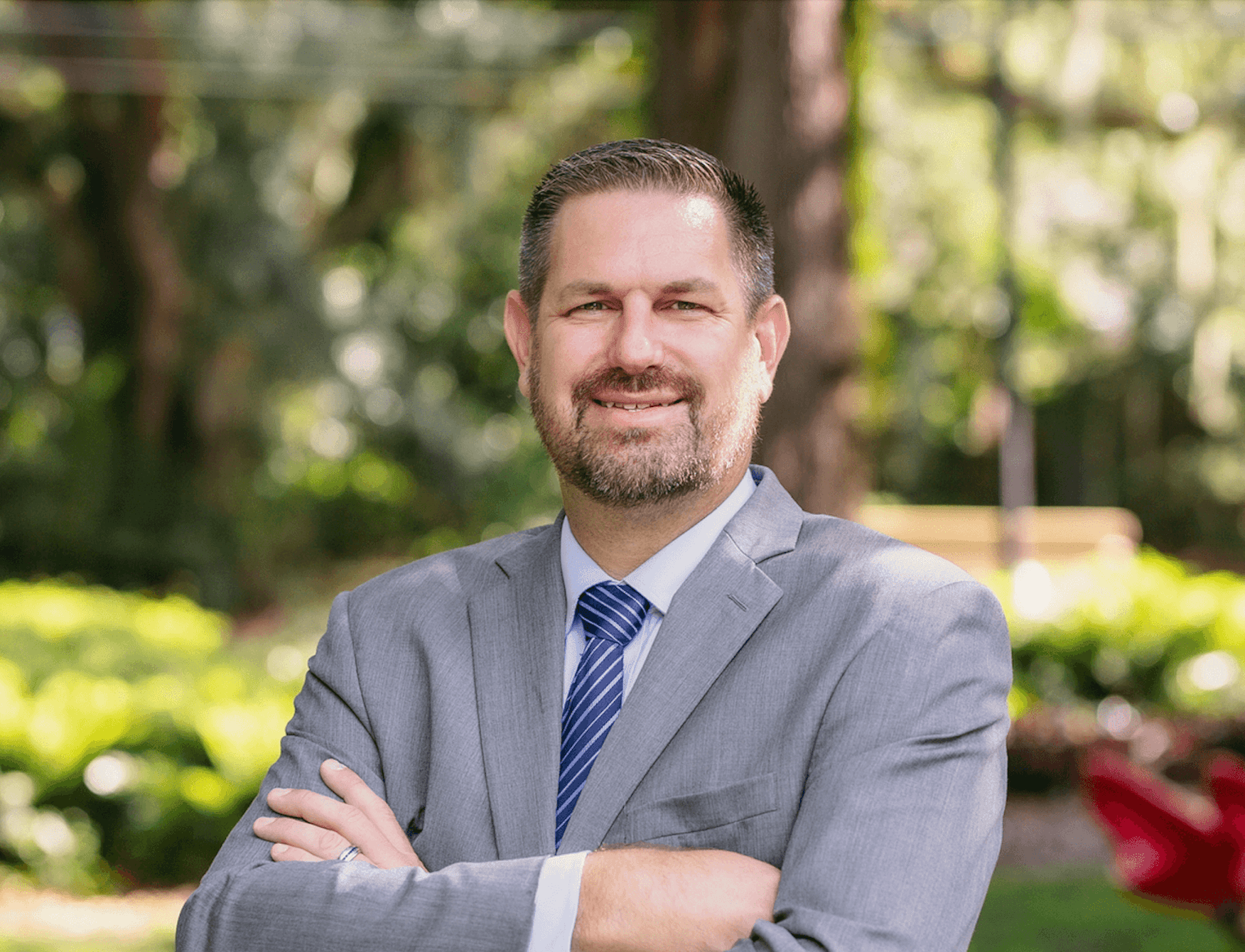
This is Hodge’s second run at public office. The 48-year-old who turns 49 in September, was last on the ballot in 2024 when he ran for Orange County Supervisor of Elections after Bill Cowles retired. That position ultimately went to Karen Castor Dentel, and Hodge, who chaired the Orange County Democratic Executive Committee from 2016 to 2022 while also serving as vice chair of the county’s Board of Zoning Adjustment, went to work for Semrad. Hodge has also worked as chief of staff to County Commissioners Emily Bonilla and Mayra Uribe, who is currently running for Orange County Mayor.
The way Hodge tells it, it was Semrad who nudged him to run for commissioner.
“My boss came to me probably five months, six months ago and said, I love you as my chief of staff but I think I would rather have you as a colleague,” he said in a Tuesday phone interview. “And she said, With all the change going on in the county right now, where we’re adding two new seats and six new commissioners, I need a ready-made commissioner on board, and you’re it.”
After the supervisors election, he said, others had also urged him to consider running for the District 2 seat because Moore was term-limited even if she hadn’t resigned to run for Apopka mayor.
But Semrad, he said was the “get me out the door.”
“Selfishly, I’d love to keep him as my chief of staff, BUT … he’s been doing the job for years as chief of staff to three commissioners,” Semrad told VoxPopuli via text. “At a time when Orange County faces real challenges like runaway growth, affordability and major taxpayer deals like the $120 million Visit Orlando contract, we don’t need a learning curve,” she continued. “Wes is a ready-made commissioner, and he will vote in line with my North Star: the people of Orange County.”
Now Hodge is betting that his deep knowledge about the workings of the county will resonate with voters.
“When it comes to new commissioners, there’s only one county staff and so they’re going to have to teach six or seven [new commissioners] how the county works at the same time,” he said. “My experience and knowledge of how to work with county staff and how the county operates is going to be essential.
“For District 2, they need that representation more than ever because we’re seeing a lot of growth in northwest Orange County, and we need someone that understands how does the policy work … how do things move through the system and most importantly, who is going to be there to defend our communities.”
For Hodge, who describes himself as “100 percent committed to defending the rural boundary … [and] protecting our rural settlements," that means reining in the “mega developers” so they don’t “put whatever they want wherever they want.”
Hodge said he wants to work to preserve areas like Wekiva Springs and Rock Springs Run while at the same time encouraging responsible eco-tourism to provide additional economic opportunities for the community.
“People can utilize those natural resources and run a small business. There's multiple small businesses that do paddle boards or a cafe or canoes, kayaks. Those are great opportunities that we need to be investing in and sharing the beauty of our community.”
He said he also wanted to see the county do more to support both Apopka and Ocoee, which city leaders often say has not gotten enough attention from Orange County. " I've been around in Ocoee for many years. I know the commission. I know the mayor. I want to see see Orange County do more to support Ocoee.” He said the county commission “could do a better job” supporting both cities. “Not necessarily in telling them how to do things, but to support them.”
Hodge’s other top priorities are affordability and transportation. He lays responsibility for the county’s snarled traffic and lack of housing on a county commission that he described as “essentially a green light to any development in Orange County.” He added, “We didn’t grow in a smart way.”
Rather than continuing to build outward, contributing to sprawl, Hodge favors infill development. “If we can find areas for increasing density and work on improving things there, it’s far more efficient, it’s far more effective and it costs our community and taxpayers less,” he said.
And he really wants to get residents off the roads.
“I can’t tell you how many people I’ve spoken to that are just tired of sitting in traffic,” he said. “When half of Apopka leaves Apopka every day to go to work, we’ve got to address those transit options beyond just a car.”
To that end Hodge supports public, or multi-modal, transportation — implementing bus rapid transit, improving SunRail’s consistency and frequency so it can extend to the suburbs; and reviving the Orange Blossom Express, which used to traverse U.S. Route 441 from Eustis to Orlando. He also favors building out the trail network for easier biking through the county.
Bringing more jobs to the outer municipalities, like Ocoee and Apopka, is another piece of the puzzle: enabling more people to work where they live, so that walking or biking to work becomes realistic.
“ All of this is interconnected, of course. It's going to be a Yes, and … approach. We've got to look at how we're dealing with housing, how we're dealing with transportation. Obviously, that means roads, but I want to see it focus more on bus rapid transit and, and rail options.”
He recalled a trip to Seattle where he got around the city using its light rail system, which connects to the airport. “We got off the plane, got right onto the light rail. I never had to rent a car, and it was great,” he said.
“We need that experience here, not only for our residents, but for our tourists. You know, when tourists come here for the big events at the convention center, that Monday after, there's a ton of emails about how horrible traffic was: I spent four hours of my day sitting in traffic. I missed most of my event.
“That sticks with people," he continued. "If we want our tourists to have a better experience and come back, we've got to give them better transportation options in our tourism area." He supports tapping into tourist development tax (TDT) funds for those projects. “If I can use TDT dollars to make that experience better, I can unlock those county dollars to use in some of our other communities for other transportation options.”
Tourist impact is a key reason Hodge opposes the movement to build an Immigration and Customs Enforcement (ICE) detention facility in east Orlando. While he said he “fully supports enforcing immigration policy,” the aggressive ICE tactics that have led to detentions of U.S. citizens and legal residents could scare off would-be tourists, particularly those from other countries, who “fear being stopped and harassed by law enforcement,” he said.
“If they are truly horrible criminals, then, yes, we need to get them out of the community. But our neighbors that are here contributing and doing work in our communities, we need to find a way to make sure they know that they’re welcome here, that we appreciate their contributions and they’re part of our community.”
Hodge added that the intergovernmental agreements the county has been required to sign with ICE, mandating the cooperation of local law enforcement has cost the county around $2 million dollars.
“Our jail is being used to house detainees, and we’re being reimbursed at a rate that is less than half of what it actually costs us as a community,” he explained. “So our federal tax dollars are going to ICE. Our local tax dollars are being spent to pay for the jail to house federal detainees that we’re not getting reimbursed at 100 percent. And we’re also using local taxes to pay deputies and corrections officers and police officers to enforce immigration. So we’re being basically tripled taxed on this.”
When it comes to property taxes, Hodge said he is opposed to their elimination because those taxes fund key county services, and “the state legislature has failed to talk about where else does that revenue come from.” He noted that a sales tax, often floated as a potential revenue generator, would disproportionately impact low-wage earners. He also added that renters will see no benefit from a property tax cut.
“I’m a property owner, I get it. I would love to have a little bit less on my tax bill," he said. "But I also understand as a county employee the cost it takes to run the county, and we already have dramatic needs.
“We're already in a $22 million dollar deficit in our road maintenance programs. We're billions of dollars in the hole for adequately funding our transportation network, and so when we're looking at just cut, cut, cut, cut, cut, things are only going to get exponentially worse because the resources to make these things happen just aren't gonna be there.”