"Local news worth reading" — The New York Times
SUBSCRIBE
The independent voice for West Orange County news
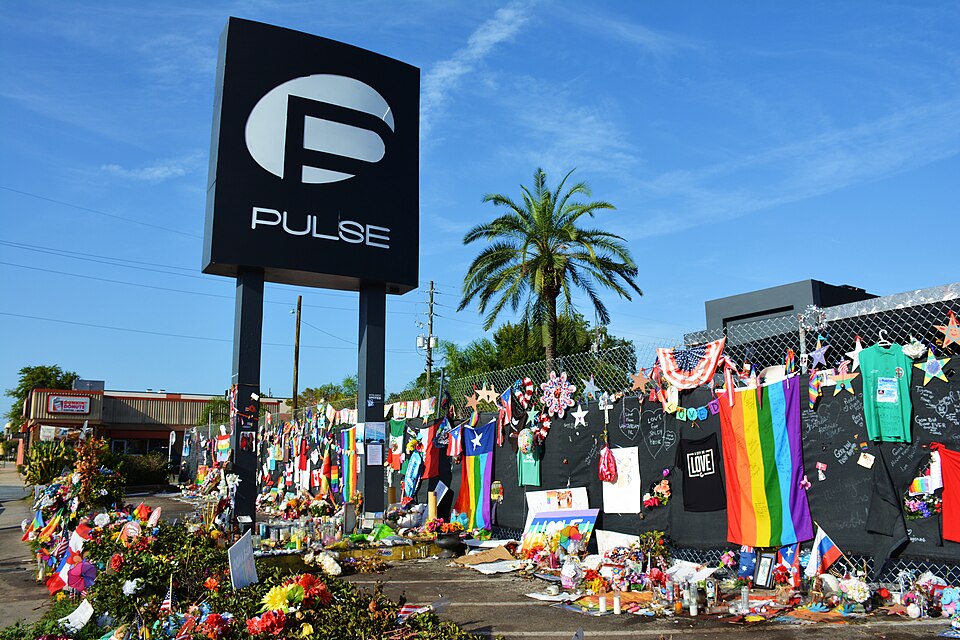
It’s been 10 years since the mass shooting at Pulse nightclub in Orlando.
But for some, it feels like yesterday.
"The 10 years came by so fast," said Josean Garcia, 35, a Pulse survivor and musician who now performs as Josean Lavoe. "It kind of feels like it was a year or two ago that it happened. I remember it so vividly."
He remembers standing on a stage near the bar when the shooting started. He remembers the smell of gunpowder filling the room, a smell so overpowering he could taste it. And he remembers hearing the sounds of gunfire moving farther away from where he was hiding and seizing that chance to escape.
Garcia, who currently lives in Puerto Rico, recently began sharing his story about that horrific night on TikTok, becoming something of a bridge between those who were there and made it out and a generation of LGBTQ+ people who were just children when the shooting occurred. Some have never heard about the shooting at all.
On June 12, 2016, a gunman opened fire inside Pulse nightclub during Latin Night, killing 49 people and wounding 58 more in one of the deadliest hate crimes against LGBTQ+ people in American history. It’s considered the deadliest terror attack since Sept. 11, 2001.
The mass shooting occurred in Orlando, but its impact rippled out far beyond the city. Memorial events take place across the country each year. But a decade later, Pulse is no longer simply one horrific night of violence mourned. For some it became a defining moment, spurring advocacy and a drive to ensure that the LGBTQ+ community remained visible and resilient and that the next generation knew the story.
For survivors, healing remains an ongoing process.
"Grief is not tidy; healing is not neat. There is no timeline on grief," said Brandon Wolf, 37, who lost his best friends, Drew Leinonen and Juan Guerrero, in the shooting. He survived by hiding, crouched in a bathroom. He has spent the past decade advocating for LGBTQ+ rights and gun violence prevention on behalf of Equality Florida and Human Rights Campaign. He wrote about his experience in A Place for Us: A Memoir (Little A, 2023).
"Healing is a journey, and I think one that I'm still figuring out," he said. "The most important part of healing for me has been community. Community has saved my life on a number of occasions, and that is certainly true in the wake of the Pulse nightclub tragedy."
Garcia has been more isolated. He avoids the nightclubs and bars that he used to love and that once felt like home.
"I haven't really attended anything since the shooting because I'm not too good with big crowds," Garcia said. "I've been kind of isolated from events like that."
But he’s found talking about his experience surprisingly cathartic.
“Speaking about my experience on TikTok has been healing for me. It's kind of like free therapy."
Oakland resident Carlos Esquivel, 43, worked at Pulse years before the shooting. "I was actually part of the opening team of Pulse," he said. "I was one of the bussers there when I was 21."
He also liked to party there. "I remember enjoying Saturday nights at Pulse as a Latino LGBT member, and the fact that [the shooting] happened on Latin night, it really was a shock," said Esquivel.
But he said the shooting ultimately strengthened Orange County’s sense of community. In the years that followed, he said, more businesses began displaying signs that identified themselves as welcoming spaces to LGBTQ+ people. Events such as the annual CommUNITY Rainbow Run became symbols of solidarity and remembrance.
"It was such a tragedy, but it really kind of spotlighted Orlando as a welcoming, inclusive community," he said.
He’s become a vocal advocate for LGBTQ+ visibility in Oakland, pioneering the town’s first Pride Month proclamation in 2023. The town commission approved the request unanimously. And the town has issued a Pride Month proclamation every year since.
For Esquivel, the proclamations represented more than symbolic recognition. They signaled that LGBTQ+ residents were seen and welcomed in a small town, challenging assumptions about what acceptance looks like outside major cities.
"That makes me feel very proud of this community," Esquivel said. "You would think sometimes that smaller local communities tend to be more conservative or shut others out, but it warmed my heart.”
(VoxPopuli reported last week that Gov. Ron DeSantis’s new anti-DEI law, signed in April, will prevent any future proclamations.)
For all of the attention that the 10th anniversary is receiving this week, survivors do worry that like other events that shocked the public consciousness — the Oklahoma City bombing; Sept. 11; the 2017 shooting in Las Vegas; the Marjory Stoneman Douglas High School shooting in 2018 — Pulse will eventually fade from public memory.
That fear has fueled much of Wolf's work over the past decade.
"Yeah, I've always been worried that as time goes on, stories fade," he said. "That is a big part of why I've been so committed to sharing the stories of my best friends, the stories of others, not just as they died, but as they lived."
Wolf said remembering Pulse means more than reflecting on the tragedy once a year. It means keeping alive the stories, personalities and lives of the people who were lost.
"If we don't share those stories, other people won't," he said. "It's our obligation, it's our responsibility to keep those stories, those names, those lives front of mind for people."
Garcia agrees. He began to share his story publicly on TikTok in March.
"The crazy thing is, I never spoke about any of this before. It's about to be our 10-year anniversary, and I've never been public about my experience," he said.
But in June 2025 survivors and family members had the opportunity to walk through the Pulse building before it was demolished in March to make way for a permanent memorial. That experience changed things for him.
"I got to go in with my father, and I saw it for the first time," he said. "I think that's when I gained an interest in talking about my experience."
Now, through his TikTok videos, Garcia is teaching the next generation about an event that may be known only to them through news accounts, memorials and the voices of survivors.
"It's really cool to see the new kids discover me through TikTok and learn about this for the first time," Garcia said. "It makes me wonder if, in the future, will this be in textbooks or taught in schools?"
For Esquivel, remembering Pulse is not only about preserving history. It is also about understanding the hate crime within the broader context of fighting for LGBTQ+ civil rights. He worries younger generations may not fully appreciate how quickly hard-won rights and protections can change.
The last several years have seen a rash of anti-LGBTQ+ laws passed in the Florida Legislature, including banning books with LGBTQ+ themes or characters in public school libraries; restricting discussions about sexual orientation and gender identity in public schools; dictating bathroom access for transgender people. On Monday, the governor declared June to be “Faith and Family Month,” part of a larger movement of conservative governors to counter-program Pride Month. Winter Garden made a similar proclamation on May 28.
"I think my generation often reminds the younger generation that just as rights have been fought for and given, they can be easily taken away," Esquivel said. "Don't take these things for granted. Be politically engaged. Be an activist in your own way."
Meanwhile, Wolf emphasizes the importance of living openly and authentically. Following Pulse, he worried young people would be “scared into the closet,” fearing it would never “be safe to be themselves fully and unapologetically.”
Instead, the opposite happened.
“I was so inspired in the days, months, and years that followed by the young people who dared to be themselves more boldly, more unapologetically than they were before."
That is the legacy he hopes survives.
"I hope that when young people visit the memorial site, or reflect 10 years later, or learn about Pulse, perhaps for the first time, that they feel that sense of responsibility they have to be more unapologetically themselves," Wolf said. "That the world, in the face of great hatred and violence, doesn't need us to shrink away, but needs us to stand taller with our shoulders back and be boldly us."
Norine Dworkin contributed reporting.


