"Local news worth reading" — The New York Times
SUBSCRIBE
The independent voice for West Orange County news
Orange County Public Schools (OCPS) plans no changes to its book review policy in response to a new memo from the Florida Department of Education that demands ever more vigilance for content deemed objectionable, according to incoming School Board Chair Angie Gallo.
The Sept. 23 memo, drafted by Education Commissioner Henry Mack, directs school districts to pre-empt parent complaints about books containing “inappropriate material and content” by continuously auditing and removing such novels from school libraries and classrooms. Mack warned public and charter school leaders that their districts could face “corrective measures” if deemed out of step with state law, which requires schools to provide only materials that are “age- and developmentally appropriate.”
In Orange County, it will be business as usual, Gallo said.
“He didn’t change the law,” Gallo told VoxPopuli in a phone interview, in reference to Mack’s memo. “He set forth expectations, but the law is still the law in place.” Orange County Public Schools already has a “robust policy” in place to vet and review books, she said, meaning the district is already in compliance with the laws Mack cited in his memo.
“When I spoke to my general counsel about this latest memo needing a policy change, I was told that our policy is good,” Gallo said. She added that Orange County media specialists have worked “incredibly hard” over the last several years to “vet all books” and that all new titles added to school libraries were “scrutinized” to ensure they met school standards.
“The bottom line is, I think we are adhering to the law as written,” Gallo said.
Mack’s instructions are the latest move by the DeSantis administration to restrict student access to certain books, a yearslong pursuit that has resulted in thousands of books — particularly those by Black and LGBTQ+ authors — being removed from school shelves. Florida has led the nation in book banning for the past three years, with public schools across the state removing more than 9,000 books from their libraries and classrooms since 2021. A substantial number of these bans have been the direct result of complaints from parents and community members, often in public forums such as school board meetings.
In his memo, Mack referenced a recent incident that took place at a Hillsborough County school board meeting, where parents read passages with sexually explicit content from the books, The Bluest Eye by Nobel Prize- and Pulitzer Prize-winning author Toni Morrison, A Court of Wings and Ruin by Sarah J. Maas and Beyond Magenta: Transgender Teens Speak Out by Susan Kuklin.
A similar event occurred in Orange County in 2021, when far-right blogger Jacob Engels was removed from a school board meeting after he read passages containing sexual content from Maia Kobabe’s Gender Queer: A Memoir. Following the meeting, school administrators pulled four copies of Gender Queer available at three Orange County high school libraries, and the Department of Education launched an investigation to find who authorized the purchases of the memoir.
Mack believes such incidents are the result of parents acting as a “quality-control mechanism” for schools in place of leadership. Reactive review of books is “not sufficient,” Mack said. He wants schools to review and remove titles from shelves before they cause offense. The Department of Education would otherwise hold them accountable, Mack threatened, including by preventing the district from acquiring additional library materials or even withholding state funds until the district achieved compliance with state laws.
“A process that depends on a parent discovering explicit material, reading it in a public meeting, and then forcing a district response is not only severely flawed; it is administrative neglect masquerading as either ignorance or ineptitude,” Mack wrote.
However, less than 3 percent of book challenges are initiated by parents, according to the American Library Association. In 2025, 92 percent of all book challenges came from "pressure groups, government officials and decision makers, up from 72 percent in 2024," a press release stated.
Mack’s directive has already resulted in what multiple advocacy groups feared. In Pinellas and Hillsborough counties, school leaders have started pulling novels, including the ones named in Mack’s directive, from shelves.
Genesis Robinson, the executive director of the Equal Ground Education Fund, said Mack’s directive was part of a “continued culture war” being waged by Florida’s leadership against marginalized communities.
“It is a total censorship of what our young people are able to be exposed to here in a state that they purport to be free by limiting educational opportunities,” Robinson said. “We not only deprive our students of educational opportunities, but we put ourselves in a place where we can no longer lead in the education space.”
Other advocates worried that the removal of books about LGBTQ+ people and people of color from schools would further isolate members of these communities and ultimately create a less empathetic student body.
“Removing books because they show LGBTQ characters or families and reflect the diversity of our communities doesn’t protect students — it limits what they can learn and sends a message that some people and families are not worthy of being seen,” Brandon Wolf, chief spokesperson for Equality Florida, said in a statement sent to VoxPopuli.
“Our schools should be places where every student can see themselves represented and learn to respect the diversity of the world around them,” Wolf said.
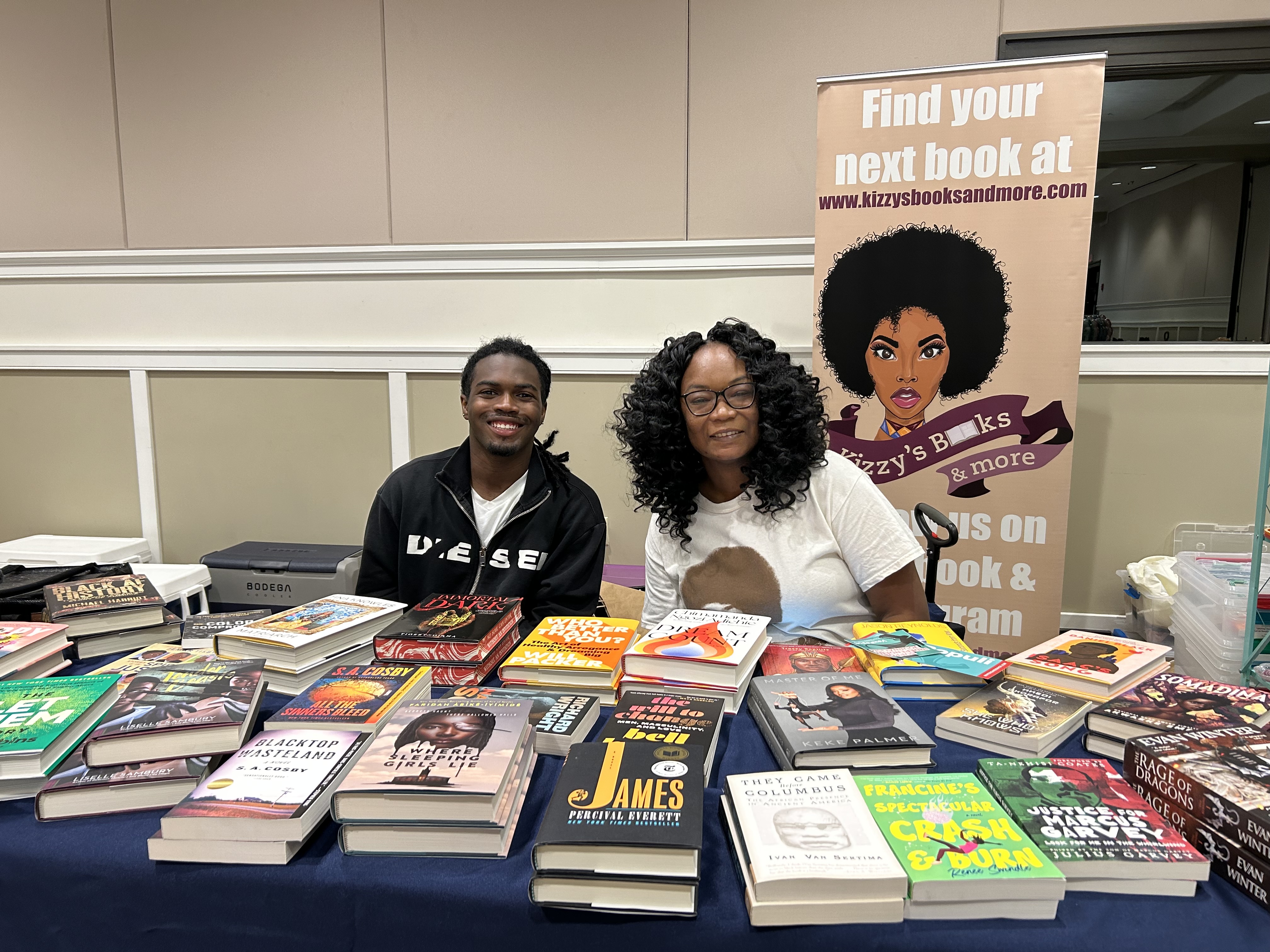
Dr. Trenessa Williams, an Ocoee resident and the owner of Kizzy’s Books & More, agreed with Wolf’s assessment. Her business sells books by Black authors as part of an effort to connect readers with Black literature. Watching school book bans escalate has saddened Williams, who believes in literature’s ability to empower.
“When a student sees a book that represents their culture, their lived experience, it causes them to engage more, especially with fostering their academic engagement, because they see a character or an experience that they can connect with,” Williams said.
Though she is concerned by how these book bans have affected student access to literature, she’s also found reasons to be optimistic. Williams said she’s seen an uptick in community interest in titles after they’ve been banned time and time again.
“People actually go out and purchase the books because even though they said these books are banned, that sparks their curiosity,” Williams said.
Though book bans have been put in place by “close-minded” people who often don’t read the titles that they’re restricting, Williams said, people are still curious about themselves and each other.