"Local news worth reading" — The New York Times
SUBSCRIBE
The independent voice for West Orange County news
Sharry Donaldson came from Orlando with her granddaughter.
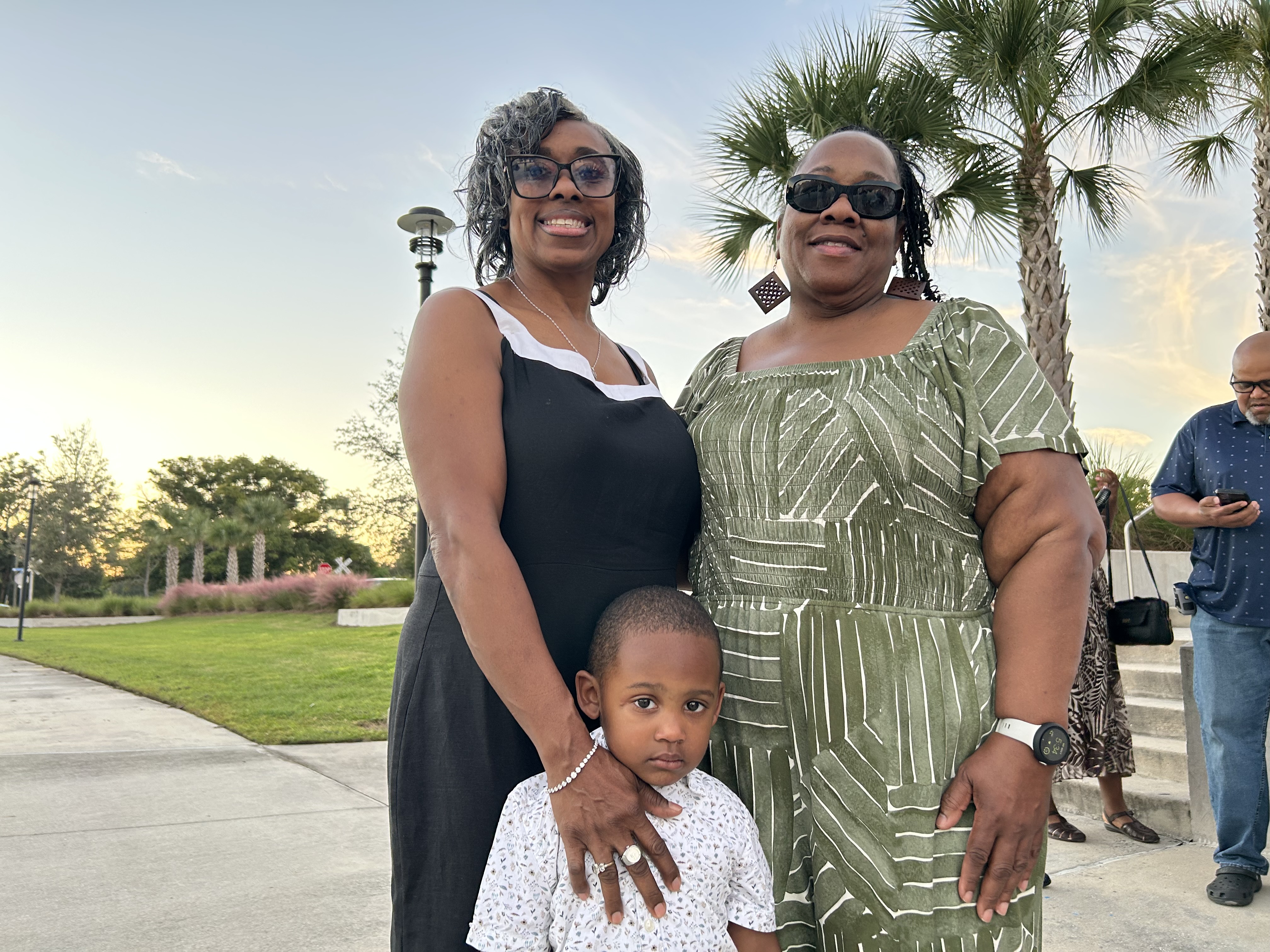
Stephanie English came from Pinehurst, North Carolina, with her son and her cousin Jacqueline Frank who traveled from DeWitt, New York.
They're each descended from an Ocoee resident who fled the town in 1920 ahead of a deputized white mob that torched Black homes, churches, a school and Masonic Lodge after another Black resident, Mose Norman, tried to vote. The rampage became the largest, deadliest day of Election Day violence in U.S. history.
Donaldson, English and Frank — all attending for the first time — were among the 80 or so people who gathered last week at Ocoee’s Unity Park, under a blue sky and scorching sun, to commemorate the 106th anniversary of the 1920 Ocoee Election Day Massacre.
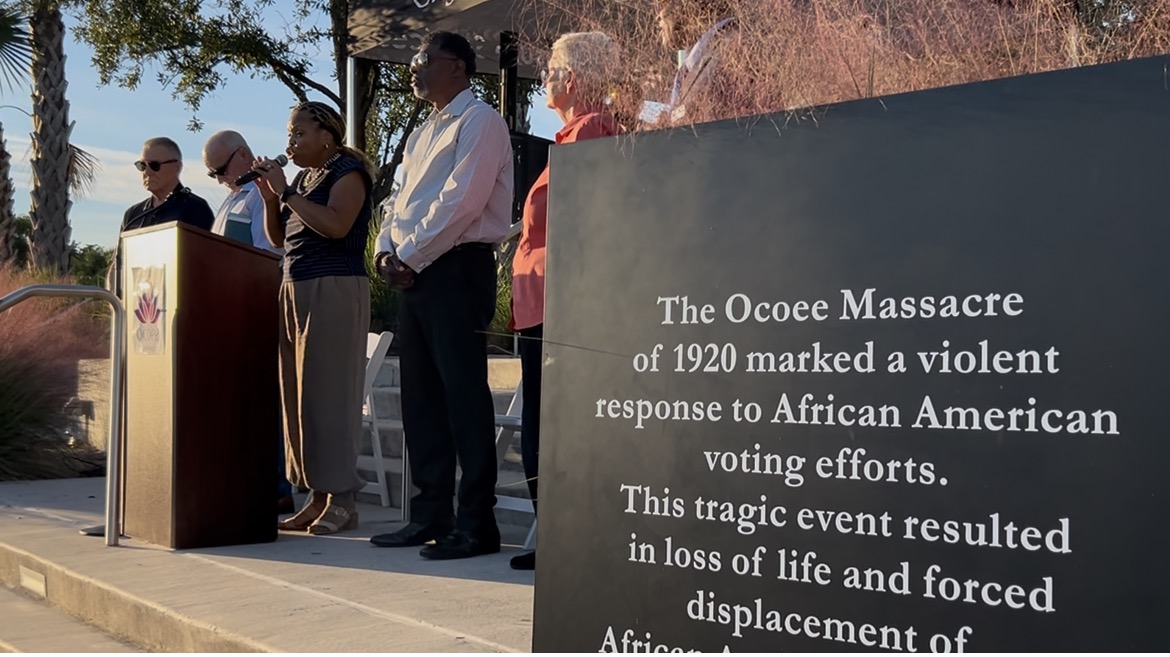
“ We should never forget. We should never forget,” said Francina Boykin, a founder of Democracy Forum, which did some of the early investigations into the massacre, locating the death certificate and grave site for July Perry, an influential Black community leader lynched by the mob.
“This was a devastating thing that happened to people, especially people who were only trying to vote," Boykin said. "Many are still unaccounted for, and until all of these people are accounted for, the work will never be over. [But] to remember them in this manner, I give a lot of credit and respect and high honors to the citizens of Ocoee for picking up and moving forward with this project.”
This is the sixth year that city has marked the anniversary with an Ocoee Remembers ceremony. It’s the third in Unity Park where two memorial walls, erected in 2024, list the names of every Black resident living in Ocoee at the time of the 1920 census.
“The individuals whose names are inscribed on these two memorial walls, each name holds a special place in the history of our city," said Ocoee Mayor Rusty Johnson, speaking during the ceremony. "We invite everyone, descendants, residents, and visitors alike, to pause and reflect on the men, women, and children who called this city home more than a century ago. We are especially honored to have descendants of those families returning today.
“… These walls will forever stand as a testament to the lives lost and the resilience of those who came before us. May they also serve as a lasting reminder of how far our city has come and of our shared commitment to unity, understanding, and healing for generations to come.”
Pastor Keith Hightower of HighPoint Church in Ocoee, who has officiated at many Ocoee Remembers events, thanked the assembled descendants for their grace and city officials for their courage in confronting an ugly chapter of the city’s past.
“… the grace that you've shown, despite the horrors that were inflicted upon you and your families, just reminds me of the grace of our Savior, who in his worst moment stood most proud. So, thank you. Thank you for being here. I want to thank our mayor and our city commissioners as well. You guys were brave. You showed courage, and I really appreciate that we have leaders here in our city who have brought out into the light events that were kept in the dark and refuse to let them slide back into the darkness.”
Paul Stallings of Jacksonville, a descendant, read a long-form poem, written by his cousin Camilla Barnes who was unable to attend. The poem told the story of the massacre and survivors’ resilience.
Annie Hamiter — she did something history should never forget. She wrote it down. On November 28th, 1920, she sent a letter with a shipment of Florida citrus. She told what she had seen. She told of homes burned, people driven from their homes, and a man taken away and lynched. She described the threats facing Black residents. "Sell your property and leave, or be shot and burned." She wrote that it seemed like a planned effort to drive Black people from their homes.
Annie Hamiter, you did not have a television camera. You did not have a microphone or a newspaper column. You had a pen, and you had courage, so you left a record. You told the story. The mob could burn homes. They could drive people away and take their property. They could try to silence witnesses, but they could not make the truth disappear.
Johnson emphasized the importance of recognizing the injustice of the past, but underscored that Ocoee today is a different place than the all-white enclave that existed for 60 years after the massacre. Indeed, according to DataUSA, Ocoee is now 38 percent white, 28 percent Hispanic, 20 percent Black and 6 percent Asian.
“We don't wanna hide anything. It's gotta be out in the public. We want you to know what happened. But we also want you to know that is not what it is now,” he said of Ocoee. “… This town is up to 52,000 people. We’re the third largest city in Orange County. I take pride that we have taken our city to the right place and moved it to the right place.”
Johnson told the descendants, “We love you and we want you to be back. Come back to us any time.”
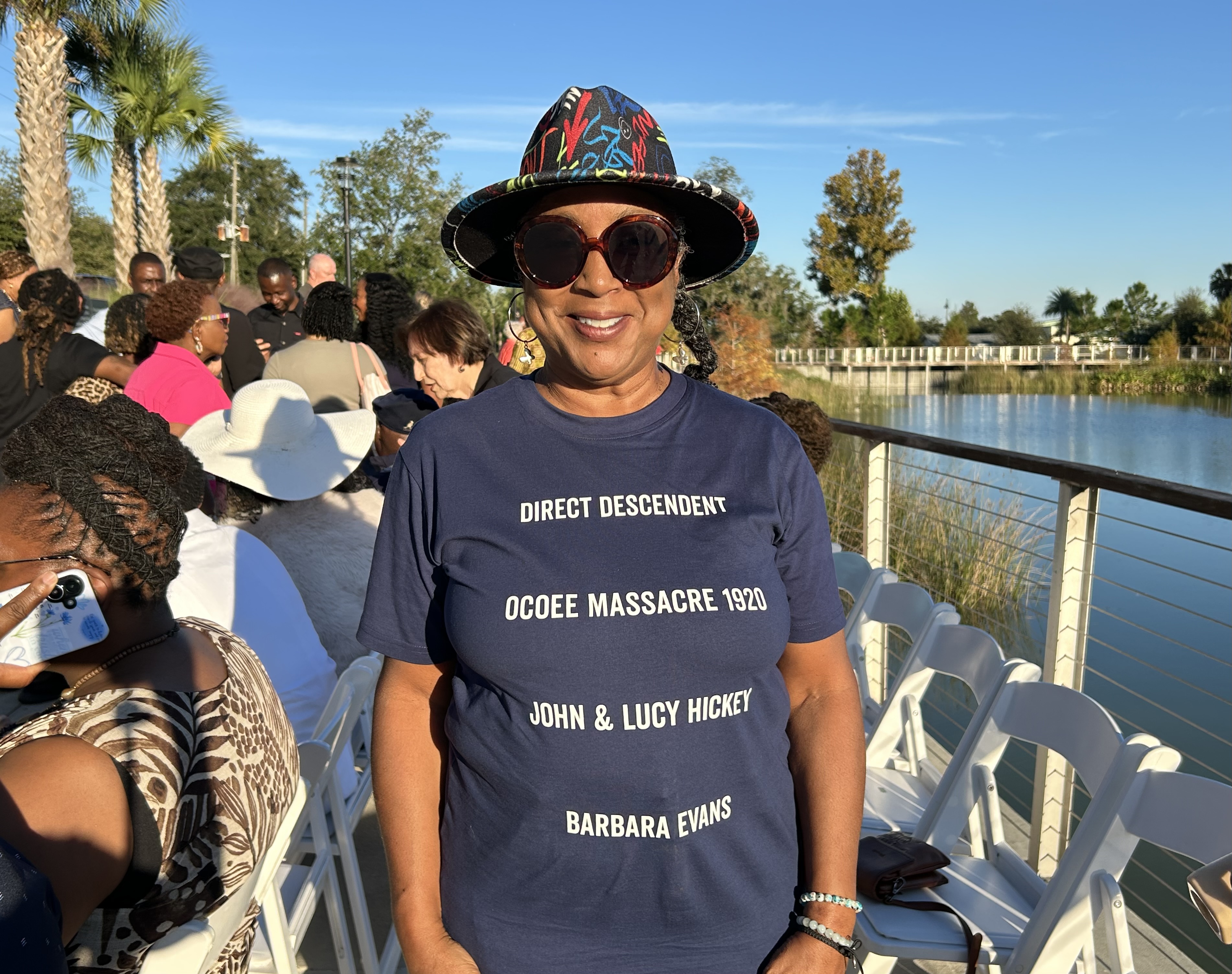
At the ceremony’s close, descendants laid white roses at the memorial walls.
Descendants English and Frank said they enjoyed their first Ocoee Remembers ceremony. "I hope we can continue to come back," said English who said she had heard about the event and wanted to see what it was about. She gestured toward her 2-year-old, Jacari. “We need to start as young as this so he can learn the history as well.”
“We’ve come a long way from 1920 to 2026,” Ocoee District 4 Commissioner George Oliver III told VoxPopuli as people began to disperse to a reception at the Ocoee Lakeshore Center.
“Here we are at a multimillion dollar dedication to the memories of the folks who lost their lives in Ocoee, so this shows that we’ve actually come a long way from a sundown town to a sunrise city. This is evidence of that. The evidence of the folks that’s coming out and the unity of Ocoee citizens as well as descendants coming together shows that we have really moved in the right direction. And we’re continuing to head in that same direction.”
Though he has participated in past Ocoee Remembers events, and was instrumental in getting the city to issue an official apology for the 1920 atrocities, this was the first commemoration Oliver attended at Unity Park. He said it was quite emotional.
“I've visited many times, but, to have the ceremony here is really hard. This touches my heart actually. Like, I kinda had to kept get myself together a couple times.”


