"Local news worth reading" — The New York Times
SUBSCRIBE
The independent voice for West Orange County news
“Shock to the system” was the phrase of the evening, describing the potential impacts of the property tax reform ballot measure Amendment 3.
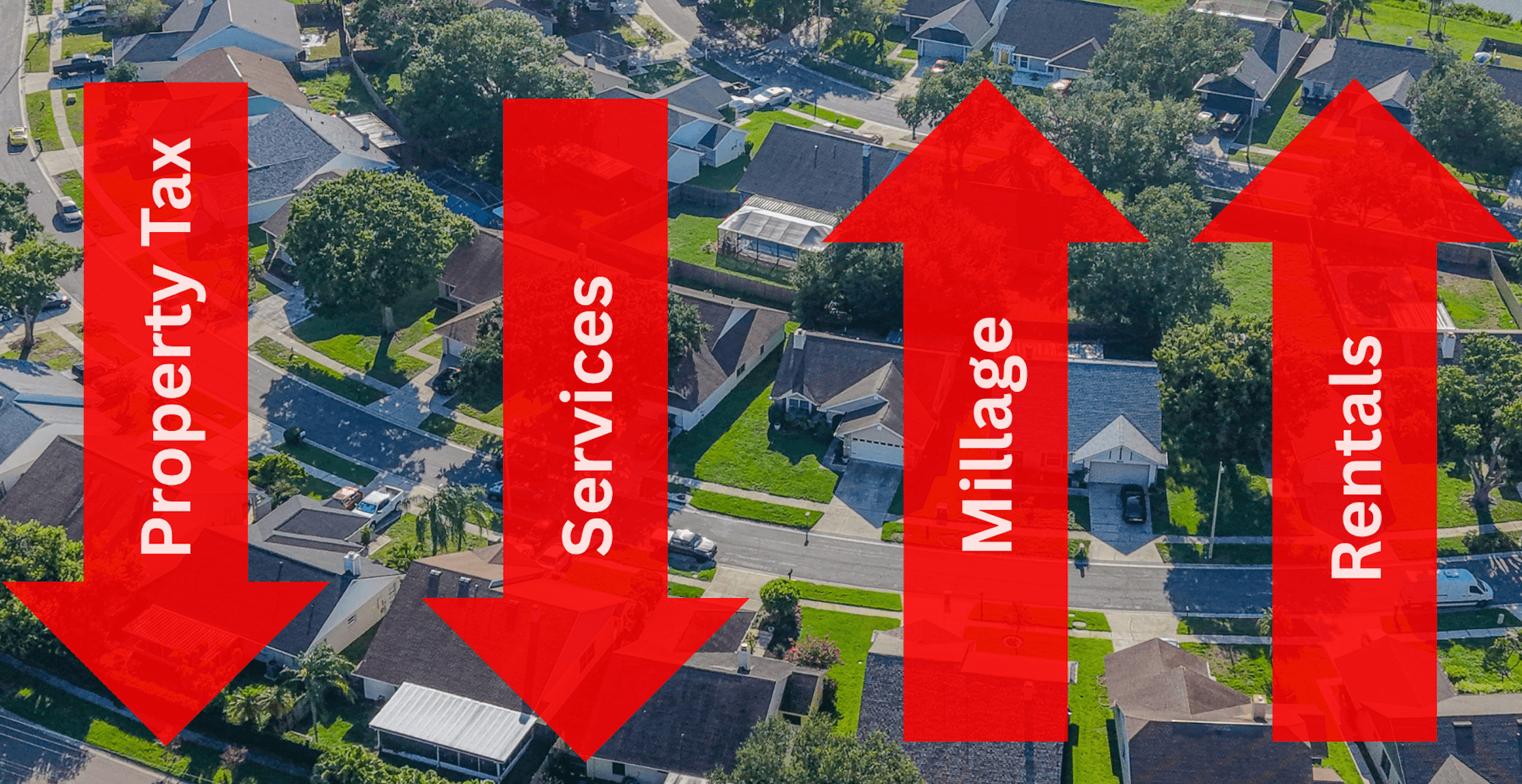
Sadaf Knight, CEO of the nonprofit, nonpartisan Florida Policy Institute in Orlando, used it when referring to the methods local governments might employ to close funding gaps in their budgets: raising fees, increasing millage rates, imposing additional assessments.
Meg Anne, director of research engagement for Florida TaxWatch, a nonpartisan independent think tank in Tallahassee, invoked the phrase to explain that local governments didn’t have “a runway to decide what services could be cut, what changes in taxes could be happening to fill that gap.”
And independent journalist Jason Garcia, who produces the newsletter/podcast Seeking Rents, used it to characterize the “astronomical numbers” of property tax dollars potentially lost to local governments.
“It works out to, if you do the math,” Garcia said as if mentally calculating on the spot. “It’s getting pretty close to 25 percent of all local property tax revenues for cities and counties. Imagine that in the context of your own household budget. If your revenue went down 25 percent, you don’t just roll forward without any changes, right?”
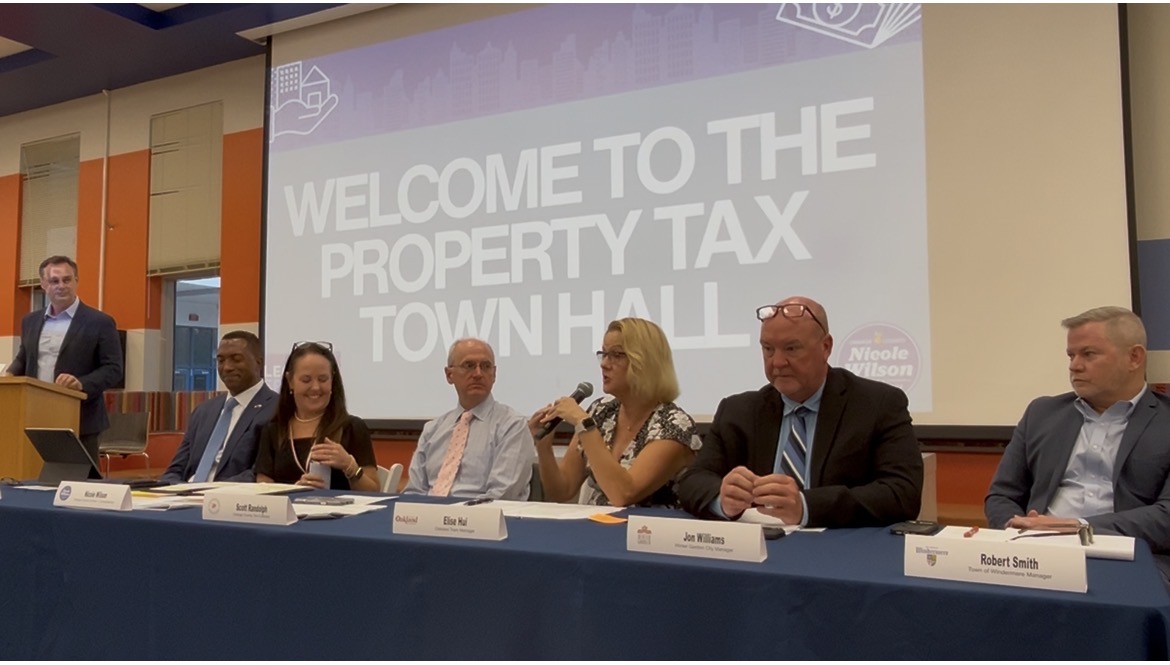
The three were part of a panel, moderated last week by Lauren Melendez, morning anchor for WKMG News 6, and sponsored by the Braver Angels Alliance of Central Florida, which aims to reduce political animosities by fostering communication, at the Clermont Arts and Recreation Center. The panel was designed to help voters still uncertain what all three amendments are about. Kesha Dawson Harris of the League of Women Voters gave a brief primer on each.
For those who need a refresher on the finer points of Amendment 3, the ballot measure would increase the homestead exemption on primary residences from $50,000 to $150,000 in 2027, to $250,000 in 2028 and then link the exemption to inflation starting in 2029. It would also reduce the annual property tax increases on commercial properties, rentals, second homes to 5 percent from 10 percent. People need to be Florida residents as of Dec. 31, 2026, to take advantage of the exemption increases. Anyone moving to Florida after that would need to wait five years before being eligible.
The amendment needs 60 percent voter approval to pass. A Public Opinion Research Lab poll of likely Florida voters, from the University of North Florida, released earlier this week, found 50 percent in favor of the amendment. That’s still 10 percentage points shy. The poll also found 14 percent of likely voters were undecided.
VoxPopuli has reported on Amendment 3 panels featuring state, county and city officials. This time, we went to hear what the independent organizations had to say. Here are five takeaways.
Bottom line, panelists said, Amendment 3 will save homeowners money.
Knight acknowledged that “people are really struggling to make ends meet as the cost of living keeps going up.”
“But that’s only one side of the ledger,” she added. “You have to think about what’s gonna happen when local governments get hit … How are they gonna make up that revenue gap?”
That’s the “shock to the system” she was talking about. She said the “real question” was whether potential property tax savings was worth incurring increased millage rates, new fees for community services or the possibility of losing services altogether.
Garcia echoed that. “The savings question becomes complicated because there is a savings on the front end just by the exemption, but you could end up giving back some of those savings in the form of whatever adaptation comes from there, whether that's property tax rates going up, whether that's new fees and stuff like that.”
“It’s true people do need a break,” Knight said, but added that there were other ways to tackle affordability issues “without pulling the rug from our local budget processes.”
Take a look at any social media thread about Amendment 3 and curbing “waste” and “fraud” in government spending are cited as key reasons by proponents of Amendment 3.
Florida TaxWatch’s Meg Anne offered some perspective on that position, saying that “property values over 10 years increased about 130 percent. That's faster than population growth. That's faster than inflation. And so I do think that there are some good faith players who are really concerned, wondering, Well, if we're getting all this extra money, is it going towards higher cost or is it going towards services that people aren't asking for and don't need? I think that there is data points that make people want to review budgets, whether they're doing it in good faith or not.”
Even so, Knight said that discussions about wasteful spending and property taxes are separate and distinct conversations that should not be tangled together.
“Why is taking a sledgehammer to our property taxes a solution for [government waste]?” she asked. “Taking away a local government’s ability to raise revenue to fund those things that are our collective priorities is not really the solution to that … They're just being presented in a way that makes it seem like they're related, but they're not, in my opinion.”
Garcia cited a 2025 study done by the economic research team at Realtor.com® that found eliminating property taxes on homesteaded homes in Florida would boost property values 7 percent to 9 percent — a benefit to homeowners at the expense of non-homeowners. Between 40 percent and 50 percent of Orange County parcels are homesteaded.
Garcia said that while Amendment 3 doesn’t eliminate all property taxes, “what you’ll see is housing prices will rise, which means for folks that don’t yet own a home … housing is going to become more unaffordable. The cost shift is to the homeowners who will save some amount of money by having a lower taxable value.”
Florida Realtors Association CEO Margy Grant has pooh-poohed that study, telling Centra Florida Public Media earlier this week it was “apples and oranges” because Amendment 3 doesn’t eliminate all property taxes. However, Gov. Ron DeSantis and DeSantis-appointed Chief Financial Officer Blaise Ingoglia have said the end goal is to do just that. The Florida Realtors Association has gone all in on Amendment 3, putting $18 million behind its Vote Yes on 3 campaign. The group is the only major state organization to back the ballot measure.
Knight said the region’s already high rental rates are likely to go even higher if landlords decide to pass on tax rate increases to their tenants. According to property tax expert Jared Walczak of Walczak Policy Consulting in Washington, D.C., that’s typically what happens when property taxes go up. In a recent analysis of Amendment 3 on Florida’s rental housing, he noted that tenants typically absorb 60 percent to 100 percent of the property tax costs levied on rental properties.
About 33 percent of Florida residents are renters, according to the Self Rent Statistics Study while 43 percent to 46 percent of residents in Orange County rent.
Currently, the median monthly rent for a one-bedroom apartment in Orange County is $1,313, according to Next Home Realty. Statewide, the median rent is $1,694/month. Nationally, it’s $1,220/month. If local governments raise tax rates to close their budget gaps, it's estimated that rent on the average Florida apartment will increase by $240 a month.
Knight added that pricier rent would make it harder for people to purchase their first homes. “This is gonna make it even more expensive … saving money is already so difficult,” she said.
Garcia — who has previously spoken about the “ rank irresponsibility of the governor and the Legislature in how they put this on the ballot” — noted that the amendment had been "passed in a 27-hour special session before giving their own economists a chance to review it." He also noted that DeSantis vetoed $1 million in funds that had been earmarked for an in-depth study on the impacts of property tax reform before it went to voters.
In addition, Florida Senate President Ben Albritton and former House Speaker Daniel Perez had different interpretations of the amendment from the get-go. The two did not agree on whether the Legislature or municipalities would make the rules for raising homestead exemptions moving forward.
“There’s another piece of this amendment that says the Legislature shall create a process by which cities and counties can continue raising the homestead exemption all the way up to 100 percent,” Garcia said. “If you ask the Florida Senate, they'll say, Cities and counties will get that ability. You ask the Florida House, No, the legislature gets that ability. These guys don't even understand what they put on the ballot.”
Albritton announced Wednesday he would vote against Amendment 3, saying it would harm law enforcement and rural counties.