"Local news worth reading" — The New York Times
SUBSCRIBE
The independent voice for West Orange County news
A tug of war between wants and needs played out Thursday night as Windermere town council members debated cost-cutting versus community events at the town's first hearing on its 2026-2027 budget.
Council Members Tom Stroup and CT Allen advocated for restoring the winter holiday event, Light Up Windermere, to the budget while Council Member Brandi Haines wanted to know why the proposed budget didn’t reflect deeper cuts.
The council ultimately voted unanimously (with Mayor Andy Williams absent) to approve the tentatively proposed budget of $12,464,394 and maintain the current 3.7425 millage rate. The millage rate has remained steady since fiscal year 2018-2019.
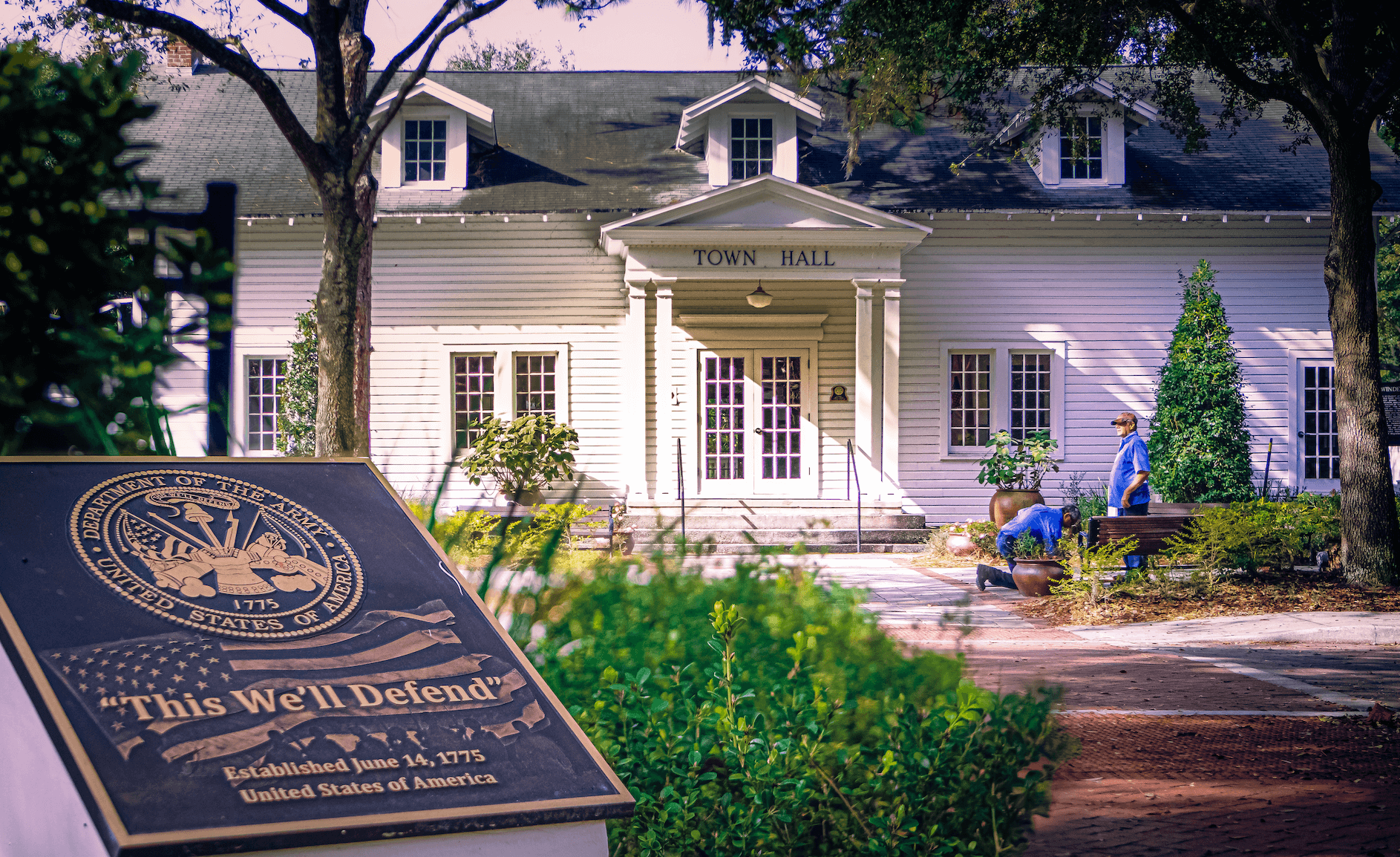
The sparsely attended budget hearing, in which town staff and officials (10) outnumbered the residents (two) and reporters (two) in attendance, lasted 33 minutes.
The second, and final, budget hearing, is Sept. 16, at 6 p.m. at Town Hall. The new fiscal year begins Oct. 1
Council Member Mandi David opened the budget discussion with requests to add a price increase for boat ramp and tennis court keys to the next council meeting agenda along with a request from the Parks and Recreation Committee to resurface the Windermere Recreation Area tennis courts at a cost of $25,000.
But Stroup’s suggestion to put Light Up Windermere back in the budget prompted the most discussion.
“Leaving it off the budget didn't hit me right, so I want to make sure … I want to put that back in the budget,” he said. “I don’t think it’s going to break the budget either way.”
He ball-parked $20,000 as a starting number for the event “for no particular reason; it was just a round number,” he said.
Mayor Pro Tem Anthony Davit, who called himself the “Grinch of the Group,” said he’d rather spend no more than $10,000 on holiday lights because of the budget uncertainty around Amendment 3, which, if passed Nov. 3, would sharply reduce the property tax revenue funding the town budget.
Last year, the town spent $35,000 on holiday lights, including installation and take-down, Robert Smith, the town manager, said.
There’s no specific line item for holiday lighting in the town budget, but it appears this expense may have been tucked into the Signs & Banners line item in Public Works. In 2024-2025, Signs & Banners was budgeted at $20,000. Last year, when the town was forced to upgrade its holiday lighting for safety reasons, that budget grew to $44,000. The proposed 2026-2027 budget is $5,000 — a decrease of 89 percent.
Meanwhile, the town’s “holiday social” line item under Special Events has remained at $15,000 for the past three years even as the Special Events calendar shrank from six events to four and the budget cut by $9,400. The city cut its Easter ($2,400) and Employee Appreciation ($6,500) events while maintaining a pancake breakfast ($3,000), 9/11 Appreciation Day ($250), and Armed Forces Day ($2,000).
The town is currently fielding proposals for a smaller lighting display that would cover the town square for about $25,000. Smith said that overestimates in their insurance budget provided a $40,000 cushion to absorb some additional costs.
“Lighting up this area right here,” said Allen, indicating the town square outside the Town Hall, “the residents love it, and I’m for the community-based events.”
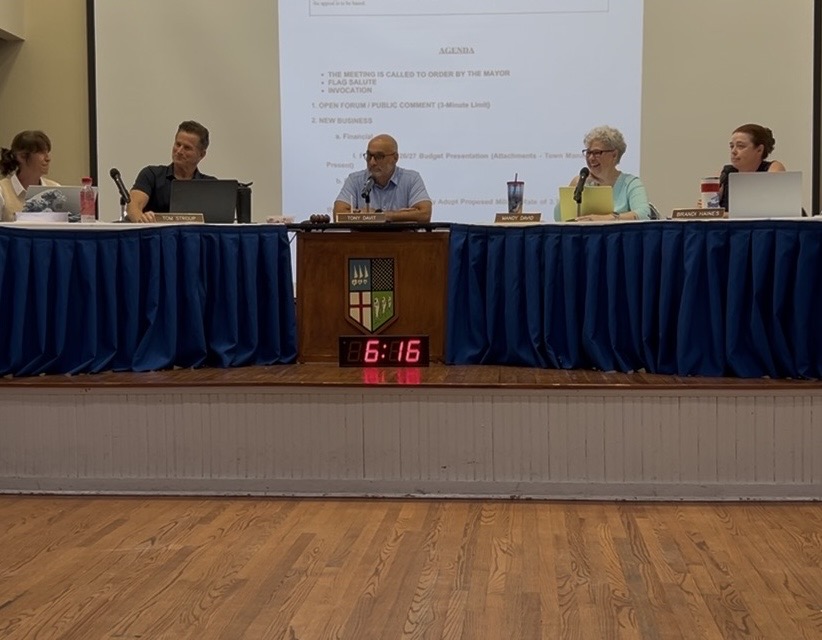
Haines, however, did not appear to be loving it.
“I thought there would be broader cuts,” she said. “ If we're cutting 10 percent, I think it should be 10 percent across the board. We should be finding everywhere that we can save.”
Haines said it was “unfair” that certain boards were losing their funding while money for things, like Light Up Windermere, which she acknowledged was important, was “creeping back in.”
“We’re cutting the money that’s provided for Historic Board. We’re cutting the tree giveaway. We’re supposed to be cutting from Parks and Rec. We’re cutting the sidewalk budget and some other things,” she said. “It seems unfair to the Historic Board and Tree Board’s budget if we’re going to put it back for everything else and then they’re the only ones getting cut.”
The budget for the Historic Board’s was cut 67 percent from $30,000 to $10,000 this year. But according to publicly available documents posted on the town’s website for fiscal years 2024-2025, 2025-2026 and the proposed 2026-2027 budget, the Tree Board’s budget has remained steady at $13,000 from last year to this year and so has the Parks and Recreation Committee’s $100,000 budget and the $8,000 set aside for the Elders Committee.
Stroup said he believed that residents would be “more than willing to contribute time, talent or treasure” to help with legacy events.
“I think that the community involvement and the community events are important to our community, and I think in this case we need to do all we can within the budget to continue to maintain those events especially some of the more historic ones we've had for quite a while,” he said. “I think we could cut smaller item projects though to keep our town events for our residents, and I think that Light Up Winter is one of them.”
Davit agreed, adding that if Amendment 3 passes, “we are going to have to find new and innovative ways to support these events, [like] private partnerships to help with that. But the status quo is not going to be able to be maintained.”
Windermere’s proposed 2026-2027 budget is balanced between revenues and expenditures at $12.4 million. Absent passage of Amendment 3 on Nov. 3, the town anticipates bringing in $4.6 million in property taxes. The town’s gross taxable value is just shy of $1.3 billion, and a reserve fund contains $1.4 million.
The town council approved assessments for solid waste ($518,920), Stormwater Fund ($376,525), street lights in the Willows subdivision ($17,862) and a fire assessment ($1,157,624).
Ocoee’s fire department services Windermere, and as the city has sought to diversify revenue sources beyond property taxes, it’s looked to increase its fire assessments. Smith told VoxPopuli that Windermere will be paying Ocoee $1.1 million for fire-rescue service in the coming year. The additional $57,000 collected is destined for a restricted fund, Smith said, intended to “buy [Ocoee] a water truck in year four of the contract.”
Smith said Windermere’s annexations from Chaine du Lac and Estancia along with the development of the downtown 500 Block allowed the town to absorb the $1.09 million increase.
“We’re able to absorb that this fiscal year,” he said. “We don’t know what’s going to happen for the next year. It all depends, but we’ll see what happens.”
Public safety expenditures, which include fire-rescue, police and code enforcement, total $10.5 million and account for 85 percent of the town’s General Fund. Of that, $3.2 million is dedicated to the town’s police department with nearly $1.2 million allocated for salaries.
This year, Windermere budgeted $325,000 for legal services, up from $175,000 last year. At last check, the town had spent upwards of $800,000 on its lawsuit to seize the five Palmer Park boathouses from their resident owners. The town lost and has appealed the verdict to the Sixth District Court of Appeal. In June, the town filed a second lawsuit in the Ninth Circuit Court against the owners to “figure out who owns what,” Smith told VoxPopuli.
“With Judge Jordan’s summary judgment, it says You don’t own it and you don’t own it. We’re trying to figure out who has to take on maintenance of the lagoon area? Who has to take on the risk management? The only way to do that is through a quiet title action. So everything is going to run concurrent together so we can try to figure out these nuances and hopefully reach a settlement.”
Most construction projects are paused pending the outcome of Amendment 3 with the Midterm Elections, however, the budget still contains funding for capital improvement projects like the Town Hall restrooms ($300,000), the multi-modal Ward Trail ($1,194,477) and the Ward Trail pedestrian bridge ($1.5 million).
Smith told the council it was a matter of “needs versus wants.”
"We had to make a cut. We don’t want it but we had to make a cut,” he said. He pointed to sidewalks and street signs saying that they would “maintain what we have and not plan for any extensions until we know what happens on Nov. 3. If there’s a sign that’s falling down or doesn’t meet MUTCD standards (Manual on Uniform Traffic Control Devices), yeah, we’ll replace it. But adding new signage; adding new sidewalks, we had to make a cut.”


