"Local news worth reading" — The New York Times
SUBSCRIBE
The independent voice for West Orange County news
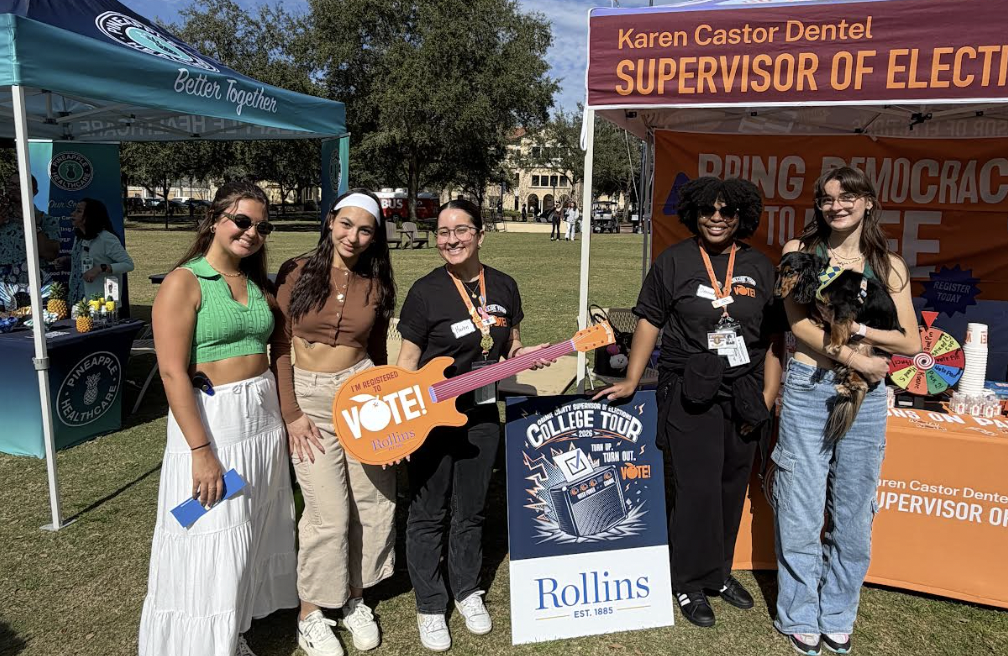
Orange County Supervisor of Elections Karen Castor Dentel on Monday announced the launch of the agency’s “College Tour,” which will bring elections staff to college campuses to register students to vote, update their voter information, explain various voting options and encourage them to sign up to be poll workers during the upcoming midterm elections.
The College Tour, which comes as students navigate often shifting voting rules that election officials say can be confusing, has already stopped at Rollins College, Keiser University and Full Sail University. Upcoming visits include Valencia College on Feb. 9 and the University of Central Florida on Feb. 11. Additional schools and dates are expected to be announced.
A former educator and Orange County School Board Member, Castor Dentel has made youth voting a primary focus of her first term in office.
“I think a lot of young voters struggle with the first time voting, and if they're in college or away from home, sometimes the process isn't as obvious,” Castor Dentel told VoxPopuli in a phone interview. “So we're trying, in our College Tour, to help the students understand the process and the options they have to make sure their voice and their vote counts.”
College students often face unique barriers to voting, including frequent address changes, unfamiliar election rules and tight deadlines. Recent voting law changes in Florida and other states have added to that complexity.
Voter registration drives and canvassing organizations have long been ubiquitous on college campuses, helping thousands of students register. However, Senate Bill 7050, passed in 2023, made it more difficult for third-party organizations to operate by shortening deadlines for registration applications to be submitted to county supervisor of elections offices, increasing fines for late paperwork and requiring groups to re-register each election cycle.
Similar laws across the country have led to a decline in some campus-based voter drives. But according to the Orange County Supervisor of Elections Office, local engagement has remained steady. Instead, officials there said, the most frequent issues that can trip up student voting are human error — and are largely preventable.
“The most common reasons are missing or mismatched signatures on vote-by-mail ballots and ballots arriving after the 7:00 p.m. Election Day deadline,” said spokesman Blake Summerlin in an email to Vox Populi. “Another issue is outdated addresses when students move between dorms or apartments.”
Navigating the changing rules around mail-in voting, including the requirement to request mail ballots with every general election cycle as mandated in 2021 by Senate Bill 90, and maintaining one's voter registration can be difficult, elections officials say.
“For students who move between dorms, apartments or back home, keeping their voter registration current is one of the biggest challenges,” Summerlin said. “Some students assume their information updates automatically, and that’s not the case.”
Questions about voter identification are also common, with many students uncertain about what kind of documentation is required. Florida requires voters to present a valid photo and signature ID, which can include a driver’s license, U.S. passport or military ID. In Florida, a student ID is also an accepted form of identification.
“Our job is to help students understand what’s required so there are no last-minute issues when they try to vote,” Summerlin said.
Even so, misinformation and fear may discourage students from voting.
“A lot of students worry about making a mistake,” Summerlin said. “Some think living in a dorm means they can’t vote locally. Others worry that voting could affect their financial aid or residency status.”
Another common misconception is that moving recently disqualifies students from voting.
“One of the biggest things we share is that if they’re registered in Florida, they can update their address at the polls and still vote,” Summerlin said. He added that updating one's address can safeguard against ballots being rejected.
Students can register to vote either in the county where they attend school or in the county of their permanent residence, but they can only be registered in one location at a time.
Once registered, students can vote in several ways:
It is highly recommended that students:


