"Local news worth reading" — The New York Times
SUBSCRIBE
The independent voice for West Orange County news
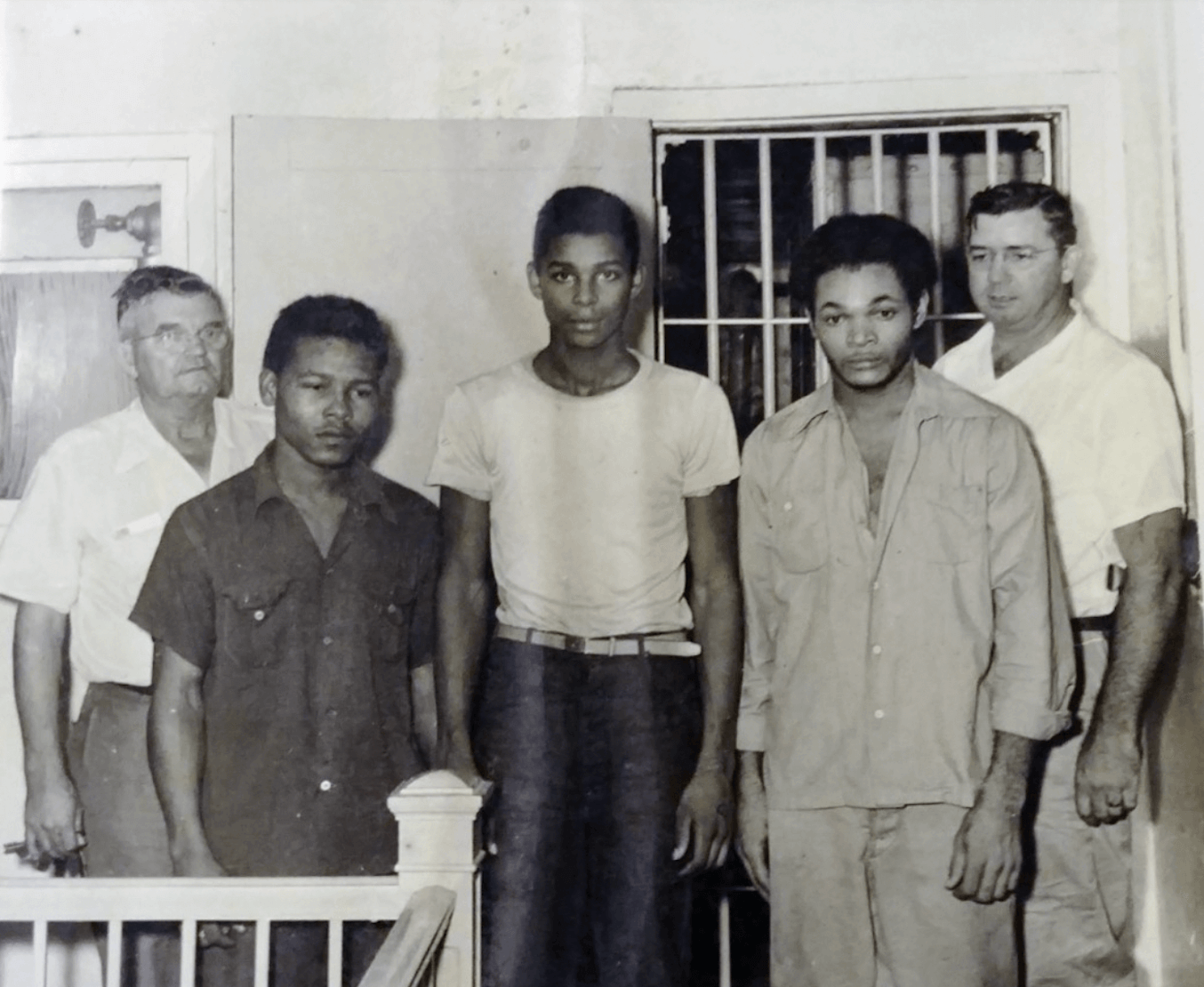
By now the tale should be familiar: Two Black men, World War II veterans, stopped on July 16, 1949, to help a couple in a vehicle disabled on a rural road outside the town of Groveland in Lake County. Later, Norma Padgett, just 17, white and estranged from her husband, would claim four Black men attacked her husband and abducted and raped her.
The entire story was a brazen lie. But by the end of it, two of the Black men would be dead — Ernest Thomas shot by a deputized mob; Samuel Shepherd shot by Lake County Sheriff Willis McCall. The remaining two — Charles Greenlee and Walter Irvin — would spend the majority of their lives in prison until paroled in the 1960s.
Civil rights advocates and family members worked for decades to clear the names of the men who collectively came to be known as the Groveland Four. In 2017, the Florida Legislature issued a formal apology for the “grave injustices perpetrated.” Grave indeed, considering that apart from veterans Irvin and Shepherd, the four did not know each other; they had alibis; Padgett’s medical exam had been suppressed as had testimony that the men had been beaten into confessing to the rape.

What Sen. LaVon Bracy Davis described as "a badge of blackness" colored the outcome of the trials as all-white juries sentenced the men to be executed or in Greenlee's case, life in prison — even after Padgett's own husband testified that Greenlee had not been present.
Padgett never recanted her accusations. Nonetheless, the four men were fully exonerated by a Lake County judge in 2021.
Bracy Davis, who represents Senate District 15, talked with VoxPopuli about the final step after exoneration: making restitution for the years of life lost both to the four men and to their families and what happens now since the legislative session ended without resolution on the bill that would have awarded $4 million in compensation to the families.
This interview has been condensed and edited.
VoxPopuli: Senator, it’s always great to talk with you. Let’s remind people what Senate Bill 694 is about.
State Sen. LaVon Bracy Davis: When I was campaigning, before I even won my election, family members from the Groveland Four reached out to me and told me that they had never received any compensation for the wrong that Florida had done to their family member.
I was surprised because while I knew the story of the Groveland Four, while I also knew that the Legislature issued a formal apology, the judicial system cleared them of any wrongdoing, the governor had pardoned them posthumously, I didn't realize that with all of that, no compensation had ever been given to the descendants and the family members of the Groveland Four.
So they asked me to file a compensation bill, which I was more than honored to do. So this session as my very first bill, I filed a compensation bill for the descendants of the Groveland Four. I lobbied this bill very hard. I sat down several times with the Senate President [Ben Albritton] also with the Appropriations Chair [Sen. Ed Hooper]. I also shared the story with the Legislative Black Caucus. So I was honored that this bill moved its way through the Senate all the way to the Senate floor, and it passed unanimously.
At first, when I filed the bill, it didn’t have a compensation number. After negotiating and talking with the chair of the appropriations [committee], we landed on $4 million. There were four gentlemen, and so each of their descendants would get $1 million each. It passed unanimously.
I’m glad the Legislature did the apology, and I’m glad that Sen. [Geraldine F.] Thompson really championed this issue years ago. I’m glad that they were exonerated. I’m glad that they were pardoned. I’m glad that the charges were dismissed. But that doesn’t fix 76 years of pain. That doesn’t dismiss the generational trauma that these families have had to endure.
VoxPopuli: What do you mean by the "generational trauma"?
State Sen. LaVon Bracy Davis: I brought the families to Tallahassee and for Black History Month, we did a panel discussion with the Legislative Black Caucus and the families. And they talked about how, now they’re two or three generations removed, but how their grand uncles and aunts never talked about it. They never talked about the issue because there was just so much trauma attached to it. So you then had a generation that didn't even know what was going on with the Groveland Four only because it was too much hurt and harm that had been done. So this was a sad case of affairs, but I think the Legislature is doing the right thing by trying to fix it.
VoxPopuli: Okay, so the bill sailed through the Senate. Rep. RaShon Young was the sponsor of the companion bill in the House, and … nothing happened in the House. It didn’t get heard in a single committee. Any thoughts on what happened there?
State Sen. LaVon Bracy Davis: There was a lot of that this session. There were several really important bills that were lopsided this session. Some passed on the House floor, some passed on the Senate floor. And we know that there was only maybe 100 bills that actually passed both, which is super low for a session. Usually we’re up at about 250 to almost 300 that pass on both sides. But this year, I think it barely reached 100 if that. This was a peculiar session.
VoxPopuli: Is there a way forward for your bill since the Senate approved $4 million for the families? Or do you just plan to start again next year?
State Sen. LaVon Bracy Davis: The good thing about this bill is even though the bill wasn't heard in the House, the money is recorded in the proposed budget on the Senate side. We have not had budget conference yet, so there is definitely a possibility that the House accepts the Senate's budget. The compensation, the money, which was really the point of the bill, may find its way in the House budget. So all is not lost as of yet.
VoxPopuli: How does that work?
State Sen. LaVon Bracy Davis: There is a line item right now on the Senate side that does mention the appropriation for the descendants of the Groveland families. And so with that line item in budget conference, that's what we do, we negotiate. We go back and forth. So we would ask the House to accept our line item. It’s very similar to ... actual member projects, so we're hopeful that that moves forward in budget conference.
VoxPopuli: When we’ve posted about your bill, seeking compensation for the Groveland Four families, on NextDoor, we’ve gotten comments from people who say things like "Yes, it was a terrible situation, but I'm not to blame for the miscarriage of justice that occurred in the 1940s and 1950s, so I don’t want to see my tax dollars used to compensate the families." What’s your response to comments like that?
State Sen. LaVon Bracy Davis: I haven't seen any of those comments. This is the first I'm even hearing of that.
I've had both Democrats and Republicans alike be extremely supportive of that. Matter of fact, I have not seen any entity that is not in agreement that this was a horrific wrong, and the wrong needs to be righted. The remedy that the law allows is compensation. And so, despite when the wrong happened, we compensate families to make them whole all the time. The judicial system does it. The Legislature does it when someone has been wrongfully incarcerated or wrongfully accused or wrongfully convicted. The Legislature also does claims bills when the government harms the entity. Like if you were hit by a cop car, or a school bus, the Legislature has the right to make you whole financially.
I can't imagine someone saying that you had a sheriff that killed someone. You had a judicial system that failed these men. You also have two of the men that were incarcerated for over a decade. ... So I can't imagine someone saying that these people don't deserve to be made whole when the government has already admitted that they have been a part of their wrong. The government played a huge part in the harm of these men, and so I can't imagine anyone saying that they are not deserving, even posthumously, of being made whole.
We will make these families whole. Seventy-six years is way too long, and I do think that to some extent, a delay in justice is a denial. So the quicker we can wrap this up, and the quicker we can get these families compensated, it will be so helpful for these family members to kind of start to rebuild and to heal.